
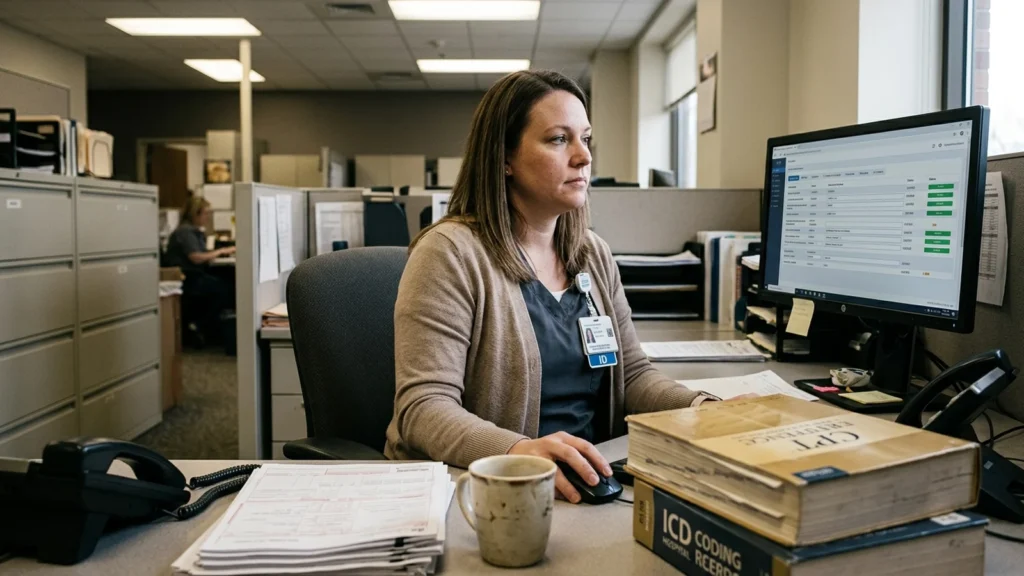
A new BCBSA analysis says AI hospital billing costs are rising, not falling. The Blue Cross Blue Shield Association found that AI coding tools used in hospital billing are adding nearly $1 billion in extra costs, according to the association’s own report.
That finding runs against the standard pitch for AI in healthcare: automate the task, cut the cost. If it holds up, it raises a harder question than whether the tools work. It raises the question of who actually captures the savings when a hospital automates its billing, and who ends up covering the difference.
The AI Hospital Billing Costs BCBSA Is Reporting
The headline number is nearly $1 billion in added hospital billing costs, and BCBSA attributes that increase to AI coding tools now used across hospital billing operations, according to the association’s analysis. That is the extent of what BCBSA has published so far: a dollar figure and a cause, without the supporting detail.
BCBSA has not released the methodology behind the estimate, the time period it covers, or which hospitals or health systems were included in the review, according to the association’s own report. Readers should treat the nearly $1 billion figure as BCBSA’s calculation until more of that detail is available.
What “AI Coding Tools” Actually Means in Hospital Billing
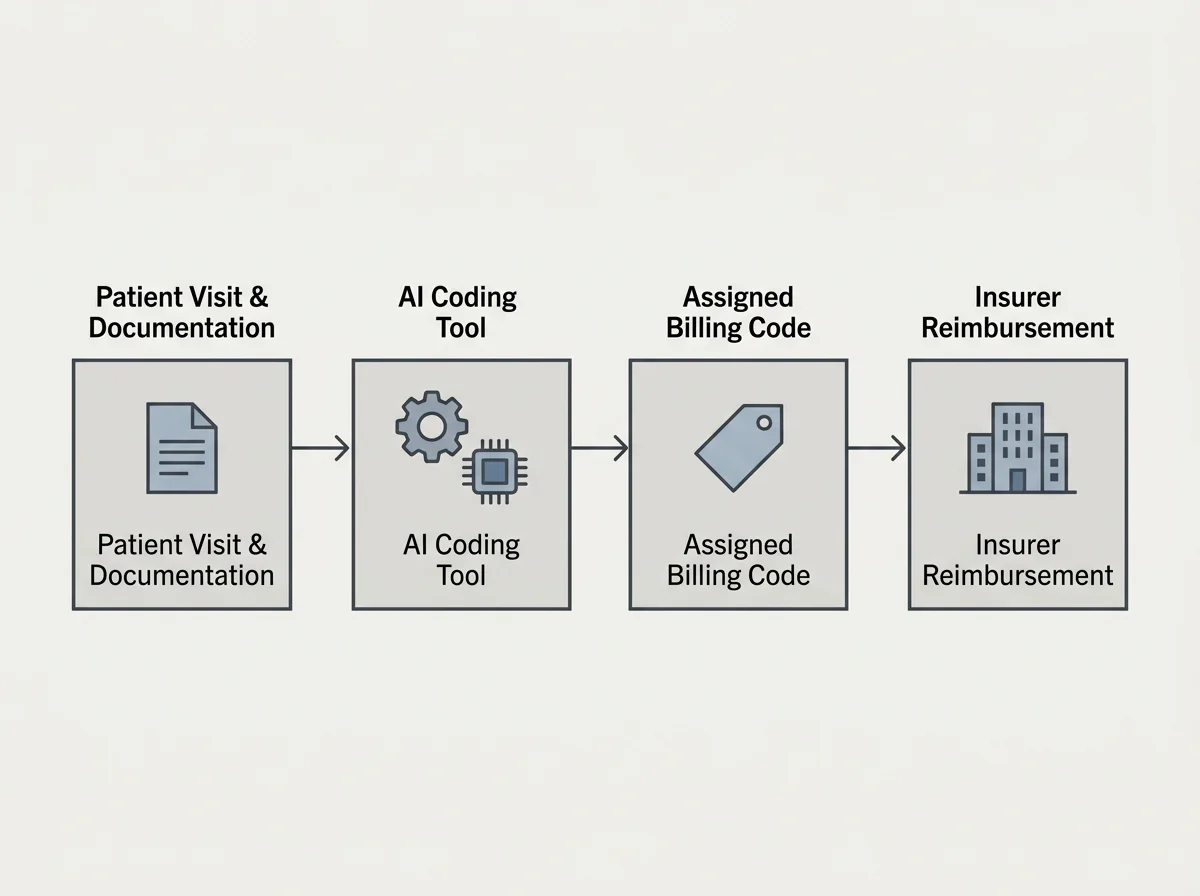
In this context, AI coding tools are software systems that read clinical documentation, such as a physician’s notes on a patient visit or procedure, and assign the standardized billing codes, ICD codes for diagnoses and CPT codes for procedures, that hospitals submit to insurers for payment. That is a separate category from the AI coding agents that write and review software, a different kind of tool getting attention elsewhere in tech coverage this week.
The distinction matters because the two trends are moving in opposite directions. Enterprise buyers have spent heavily trying to track and control what they spend on AI software development tools, a very different kind of AI coding costs, in enterprise software, while BCBSA’s analysis describes AI adding cost on the healthcare billing side instead of cutting it. Both stories use the phrase “AI coding,” but they describe unrelated tools and unrelated cost problems.
Why Hospitals Adopted AI for Billing Codes
Hospitals turned to AI-assisted coding for the same reasons they adopt most automation: speed and staffing cost. Manual medical coding is labor intensive, and hospitals have used AI tools to move claims through the billing pipeline faster and to reduce the staffing needed to code visits and procedures by hand.
How a Billing Code Changes What Insurers Pay
The code a hospital assigns to a visit or procedure directly affects what an insurer reimburses for it. Different codes carry different payment rates, so the accuracy, or aggressiveness, of coding has a direct line to the size of the bill an insurer ultimately pays. That is why BCBSA, as the association representing insurers who pay those bills, is positioned to notice when billing costs move in a direction it does not like.
What BCBSA Hasn’t Said
BCBSA has not said whether the added cost comes from AI tools producing more accurate codes than manual coders did, from AI-assisted coding that insurers would classify as upcoding, or from AI simply processing a higher volume of claims than hospitals coded manually before. The association’s analysis, as published, links the cost increase to AI coding tools generally but does not identify a cause beyond that.
It is also worth noting who is doing the counting. BCBSA represents the insurers that pay out claims based on these codes, which gives the association a direct financial interest in identifying provider billing practices that raise costs. That does not make the nearly $1 billion figure wrong, but it is a detail worth weighing alongside the source.
| What BCBSA Has Said | What Remains Unconfirmed |
|---|---|
| The dollar figure: nearly $1 billion in added hospital billing costs | The methodology used to calculate that figure |
| The source: BCBSA’s own published analysis | The timeframe the estimate covers |
| The general claim: AI coding tools are linked to the increase | Which hospitals or health systems were studied |
| BCBSA’s role representing Blue Cross Blue Shield insurers nationwide | Whether the increase comes from more accurate coding, upcoding, or higher billing volume |
A tool built to speed up billing does not automatically make billing cheaper. Speed and cost are not the same variable, and BCBSA’s analysis suggests hospitals may be learning that the hard way.
Who This Affects
- Hospitals and health systems, who adopted AI coding tools expecting lower costs and now face an association-reported increase instead.
- Blue Cross Blue Shield insurers, whose member companies pay out claims based on the codes these tools generate.
- Employers and individuals who pay health insurance premiums, since rising claims costs typically feed into what insurers charge for coverage over time.
- Vendors selling AI-assisted medical coding software, whose products are now the subject of an industry association’s cost analysis.
What to Watch Next
The next signal to watch is whether BCBSA publishes the methodology behind its nearly $1 billion estimate, including the timeframe and the hospitals or health systems it covers. A published methodology would let researchers, hospital groups, and other insurers test the finding independently rather than take BCBSA’s word for it. Watch also for how hospital industry groups respond, since a disagreement over the cause, more accurate coding versus upcoding versus higher volume, would tell readers more about the real story than the headline figure alone.
Frequently asked questions
What are AI coding tools in a hospital billing context?
In hospital billing, AI coding tools are software that reviews clinical documentation and assigns standardized billing codes, such as ICD or CPT codes, to a patient’s visit or procedure. They are unrelated to AI coding agents that write software, a separate category of tool getting attention elsewhere in tech coverage this week.
Why would AI increase rather than decrease healthcare billing costs?
BCBSA’s analysis does not specify a cause. Possibilities include AI systems generating more detailed or higher-value codes than manual coders typically produced, an increase in overall billing volume, or coding practices insurers might classify as upcoding. The association has not said which factor is driving the nearly $1 billion figure.
Who is the Blue Cross Blue Shield Association?
BCBSA is the national association representing Blue Cross Blue Shield insurers across the United States. Because its member insurers pay claims based on the codes hospitals submit, the association has a direct financial interest in identifying practices that raise billing costs.
Does this mean hospitals should stop using AI for billing?
Nothing in BCBSA’s analysis says that. Hospitals adopted AI-assisted coding to speed up claims processing and reduce the staffing costs of manual coding, and BCBSA’s report does not evaluate whether those benefits offset the cost increase it identified.
What hasn’t BCBSA disclosed about this finding?
BCBSA has not published the methodology behind the nearly $1 billion estimate, the timeframe it covers, or which hospitals or health systems were included in the analysis. Until that detail is available, the figure should be treated as BCBSA’s own calculation rather than an independently verified number.