
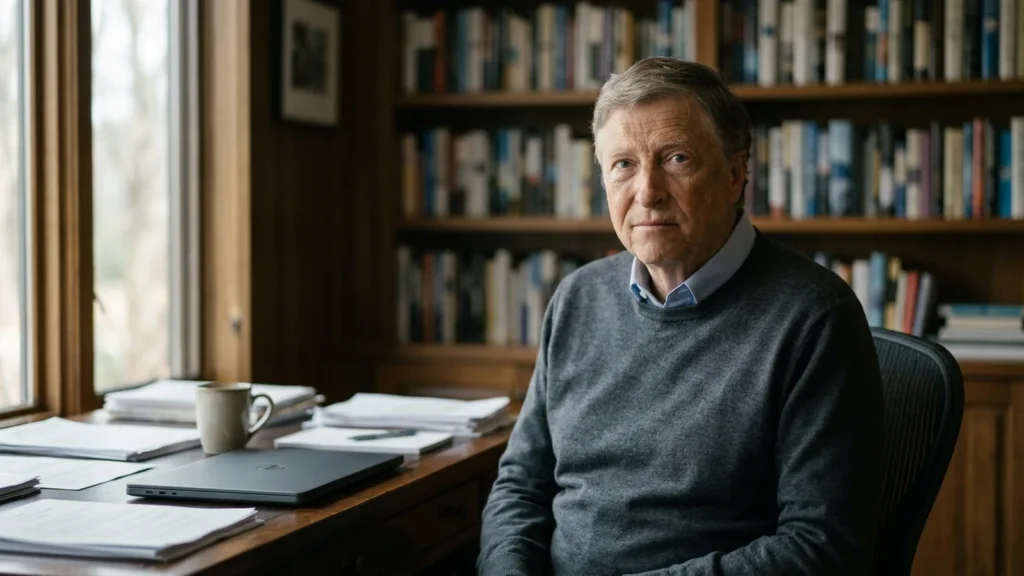
Bill Gates says unchecked artificial intelligence is powerful enough to be catastrophic, and the quote making the rounds, that AI could ’cause billion deaths,’ is already being shorthanded as the Bill Gates AI billion deaths warning. The line comes from a Guardian article published September 27, 2026, the only sourced coverage available of the remark, which surfaced through a Hacker News discussion rather than a wire report.
What’s confirmed is narrow, and what’s not confirmed matters just as much here. Gates is calling for AI regulation, and he’s using stark language to make the case. Beyond that headline, the details are thin, which is exactly the kind of gap worth being upfront about before repeating a quote this heavy.
Inside the Bill Gates AI Billion Deaths Warning
According to the Guardian, Gates used the phrase ’cause billion deaths’ to describe the risk of unchecked AI, and paired that warning with a call for AI regulation. Beyond the headline itself, no fuller quote, transcript, or surrounding context has been published in the coverage BriefFlash has been able to source.
cause billion deaths
That URL for the Guardian’s report also references Kristen Welker, the moderator of NBC’s Meet the Press, which suggests the remark may have come from a broadcast interview. That link is worth noting, but it isn’t a confirmed detail. The sourced text does not spell out the interview setting directly, so treat the broadcast context as likely rather than established.
What ‘Unchecked AI’ Usually Means in This Debate
In AI policy conversations, ‘unchecked’ generally means systems developed and deployed without binding safety regulation, without mandatory testing requirements, and without government oversight of how the technology gets used once it ships. That’s the backdrop against which Gates’s comment lands. His call for regulation fits a debate that has been building for years over whether AI companies should be trusted to police themselves or whether government needs a formal role.
Gates Has Been Here Before
This isn’t Gates’s first large scale risk warning. Long before COVID-19, he was already known for publicly warning that the world was not prepared for a global pandemic, a position that aged into one of his most cited predictions once the pandemic actually arrived. His recent AI commentary follows a similar pattern: a technologist with a large public platform using blunt language to argue a fast moving technology carries risks serious enough to require government attention now, rather than after something goes wrong.
Not Everyone in AI Agrees
Gates isn’t speaking into a unified industry. The debate over AI risk has split tech leaders for years, with some warning about existential or catastrophic scale danger and others arguing that kind of language overstates what AI can actually do in the near term. For contrast, BriefFlash has previously covered Nvidia’s Jensen Huang, who has argued the industry needs better engineering rather than new regulation, a very different read on the same technology Gates is warning about.
What’s Still Unconfirmed
Several things about this story remain open. It isn’t clear whether Gates attached the billion deaths figure to a specific timeframe or scenario, or whether it was rhetorical emphasis meant to convey scale rather than a literal prediction. It also isn’t clear what specific regulatory measures Gates is calling for, since the available coverage doesn’t go beyond the headline claim and a general call for regulation.
There’s also a broader tension worth naming without taking a side in it. Critics of doom-focused AI messaging argue that framing built around worst case, civilization scale language can overstate near-term risk and crowd out more immediate concerns. Supporters of that framing argue the stakes are exactly why blunt language is warranted. Nothing in the sourced coverage settles that argument, and this piece won’t either.
What to Watch
The obvious next step is more complete reporting: a full transcript or additional coverage confirming whether this came from a broadcast interview, and what regulatory specifics, if any, Gates laid out beyond the headline. Until that surfaces, treat the billion deaths line as a real, sourced quote fragment attributed to Gates, attached to a real call for AI regulation, but without the fuller context a claim this stark would normally carry.
Frequently asked questions
What exactly did Bill Gates say about AI?
According to the Guardian, Bill Gates said unchecked artificial intelligence could ’cause billion deaths’ and used that warning as part of a call for AI regulation. The available coverage provides only that headline level quote, not a full transcript, so the surrounding context of the remark hasn’t been independently confirmed beyond what the Guardian reported.
Has Bill Gates warned about technology risks before?
Yes. Gates has a long public history of raising alarms about large scale risk, including warning before COVID-19 that the world was not prepared for a global pandemic, a warning that proved accurate once the pandemic hit. His recent AI commentary follows that same pattern of using a large public platform to push for government attention to a fast moving risk.
What kind of AI regulation is being discussed in 2026?
In broad terms, unchecked AI refers to systems built and deployed without binding safety regulation, mandatory testing, or government oversight of deployment. Gates’s comment, as reported by the Guardian, calls generally for regulation of AI, though the available coverage doesn’t specify which safeguards, agencies, or legislative steps he has in mind.
Do other tech leaders agree with Gates’s warning?
Not universally. The AI industry remains split between voices warning about existential or catastrophic scale risk and others who argue that framing overstates near-term danger. Nvidia’s Jensen Huang, for example, has argued publicly that better engineering, not new regulation, is the better path, a contrast BriefFlash has covered separately.