

Claude Sonnet 5.5, the newest version of Anthropic’s mid-range model, was released on Monday, September 28, 2026. According to TechCrunch, Anthropic calls it a significantly cheaper, faster work partner, and the outlet reports faster response times and less token burn.
AWS announced the same day that the model is available on Amazon Bedrock and Claude Platform on AWS. The coverage reviewed here carries no prices, latency figures or benchmark scores, so the efficiency claims are Anthropic’s and AWS’s own framing for now.
Published September 28, 2026, the day the news broke.
What is Claude Sonnet 5.5 and what did Anthropic claim?
Claude Sonnet 5.5 is the latest release in Sonnet, Anthropic’s mid-range model tier, which sits between its smaller and larger models. TechCrunch’s headline gives Anthropic’s framing: a significantly cheaper, faster work partner.
Anthropic also published its own page for the model, titled Sonnet 5.5, and it drew more than 200 points on Hacker News. That shows developer attention, not a verdict on quality. The page’s contents, including any pricing or benchmark tables, are not part of the record used here, so the specifics below rest on TechCrunch and AWS.
The three efficiency descriptions in circulation each measure something different:
| Source | Wording | What it measures |
|---|---|---|
| TechCrunch report | Faster response times, less token burn | Speed and token use |
| TechCrunch headline (Anthropic’s framing) | Significantly cheaper, faster work partner | No measure given |
| AWS announcement | Lower cost per task for most work; a smarter, more efficient Sonnet model for focused coding and knowledge work | Cost per completed task |
| Not stated | List prices, latency, token counts, context window, benchmark scores | Absent from coverage |
Is Claude Sonnet 5.5 cheaper per token or cheaper per task?
The coverage does not say, and none of the three descriptions is a confirmed list price cut. Cheaper could mean lower prices, lower token use, or both.
As general context, cost per task depends on what a token costs and how many tokens a job uses. A model that costs more per token can still cost less per task if it needs fewer tokens or fewer retries, and the reverse also holds.
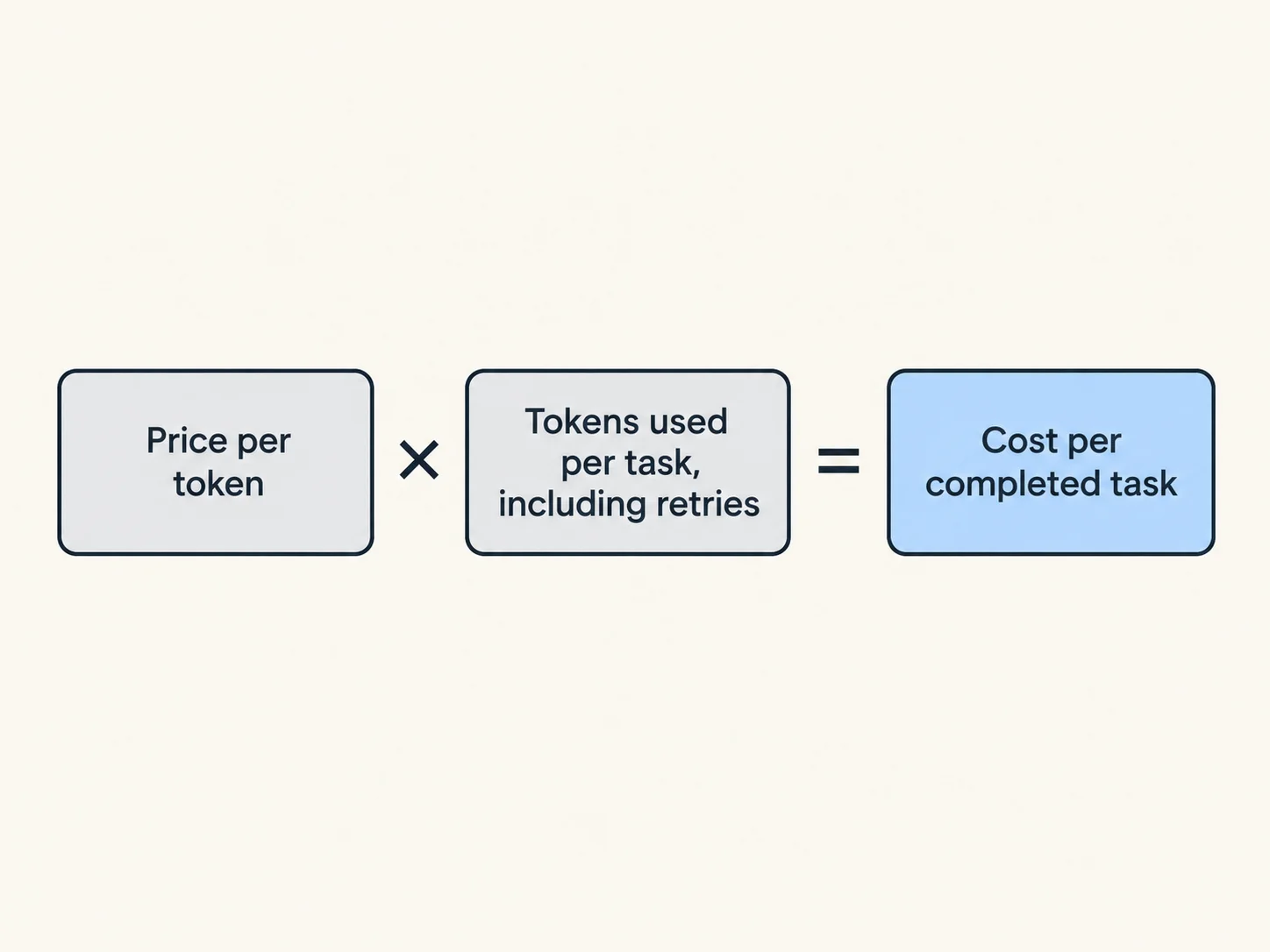
AWS words its claim as covering most work, so it is not a claim for every workload, and the coverage does not say which workloads fall outside it.
Where can you run Claude Sonnet 5.5 on AWS?
Claude Sonnet 5.5 runs on Amazon Bedrock and Claude Platform on AWS, according to AWS’s announcement. Bedrock is AWS’s managed service for accessing foundation models, and many companies buy models through it under an existing cloud contract, which is why availability there matters.
AWS calls the release a smarter, more efficient Sonnet model suited for focused coding and knowledge work. Smarter is AWS’s own word, and the coverage offers no comparison with any other model, so read it as positioning, not measurement.
Availability arrived in step with Anthropic’s release. BriefFlash’s earlier coverage of Kimi K3 landing on Amazon Bedrock described a model reaching the platform two months after its maker’s own launch, and the OpenAI and AWS Daybreak Red & Blue launch also went through Bedrock.
How can a team test whether the Sonnet 5.5 savings are real?
Measure cost per completed task on your own prompts, not cost per request. That is the quantity the vendor claims are really about.
- Pull real prompts from production, including longer and tool heavy ones.
- Run the same set through your current model and through Sonnet 5.5.
- Count tokens used per completed task, not only per request.
- Record retries and failed runs, since they add cost.
- Compare total cost per task and response time side by side.

BriefFlash has not tested Sonnet 5.5, so nothing here is a hands on result. Longer and tool heavy workloads matter most, because the coverage does not say whether the lower cost per task holds there.
What is confirmed and what is not?
The release, its date, TechCrunch’s report of faster response times and less token burn, and AWS’s announcement of availability are all in the coverage. Significantly cheaper, faster, more efficient and lower cost per task are company framing with no independent measurement behind them. List prices, latency, token counts, context window and benchmark scores are absent.
What to watch next
Three things would settle the question: pricing and benchmark detail published by Anthropic, independent testing on real workloads, and evidence on whether lower cost per task holds for longer or tool heavy work. The coverage attaches no dates to any of these. If figures change, BriefFlash will add an update note with the date. Readers tracking Anthropic’s releases can also see how Claude’s new watermarks will work.
Frequently asked questions
Is Claude Sonnet 5.5 available on Amazon Bedrock?
Yes. AWS announced that Claude Sonnet 5.5 is available on Amazon Bedrock and Claude Platform on AWS, as of Monday, September 28, 2026. AWS describes it as a more efficient Sonnet model for focused coding and knowledge work. The coverage reviewed does not include pricing.
Is Sonnet 5.5 cheaper per token or cheaper per task?
The coverage does not say whether Sonnet 5.5’s per token list prices changed. AWS describes lower cost per task for most work, and TechCrunch reports less token burn, which points to efficiency rather than a confirmed price cut. Cost per task depends on both token price and tokens used.
What is Claude Sonnet 5.5 best suited for?
AWS describes Claude Sonnet 5.5 as suited for focused coding and knowledge work. Sonnet is Anthropic’s mid-range model tier, sitting between its smaller and larger models. That suitability is AWS’s positioning, not an independent test result, so check it against your own tasks.
How can a team test whether the Sonnet 5.5 savings are real?
Run the same real prompts, including longer and tool heavy ones, through your current model and Sonnet 5.5. Count tokens per completed task, record retries, and compare total cost per task and response time. The efficiency claims from Anthropic and AWS remain vendor framing until independently measured.