
OpenAI announced GPT-6.1 Sol on September 29, 2026, describing it as near-Astra intelligence for coding, computer use and professional work at one-fifth of GPT-6 Astra’s standard API input and output token prices.
AWS lists the model as generally available on Amazon Bedrock. Near and one-fifth are OpenAI’s own claims, though, and the coverage contains no independent test of either. For teams running agent loops on Astra, the distance between near and equal decides whether the saving is real.
What did OpenAI actually say about GPT-6.1 Sol?
OpenAI says GPT-6.1 Sol delivers near-Astra intelligence for coding, computer use and professional work, at one-fifth of Astra’s standard API input and output token prices. That is the full price claim, and it comes from OpenAI’s own announcement page. The page is running above 200 points on Hacker News, so developers are reading it closely.
TechCrunch reported that OpenAI says the model improves on GPT-6 Sol across complex professional tasks, including code writing and debugging, document understanding and executing multi-step business workflows. Those areas are OpenAI’s statements relayed by a news outlet, not measured results.
What does the GPT-6.1 Sol price claim cover?
It covers one comparison: GPT-6.1 Sol’s token prices against Astra’s standard API input and output token prices, at a ratio of 0.2. It is not stated relative to GPT-6 Sol, so nobody on the earlier Sol should assume a fivefold drop from what they pay today.
The coverage gives no absolute dollar prices for Astra or either Sol, so a dollar cost for GPT-6.1 Sol cannot be stated here. It also says nothing about discounted, cached, batch or Bedrock-specific pricing. Whether the ratio holds there is unknown, and Bedrock prices should not be assumed to match OpenAI’s API prices.
Near carries the other half of the claim, and it is undefined. No benchmark names, scores or third-party tests appear in the coverage, so the size of the gap to Astra is unknown.
| Claim | Source | Status |
|---|---|---|
| Near-Astra intelligence for coding, computer use and professional work | OpenAI | Vendor claim, no independent test |
| One-fifth of Astra’s standard API input and output token prices | OpenAI | Vendor claim, measured against Astra only |
| Improvements over GPT-6 Sol on code, documents and multi-step workflows | OpenAI, via TechCrunch | Reported claim, unconfirmed |
| Generally available on Amazon Bedrock | AWS | Stated in AWS’s own post |
Where is GPT-6.1 Sol available on Amazon Bedrock?
AWS states in its own blog post that GPT-6.1 Sol is generally available on Amazon Bedrock, aimed at coding, computer use and professional workloads that run frequently. That is AWS’s statement, and it should not be stretched to cover any other cloud platform.
Why does token price matter most for agent workloads?
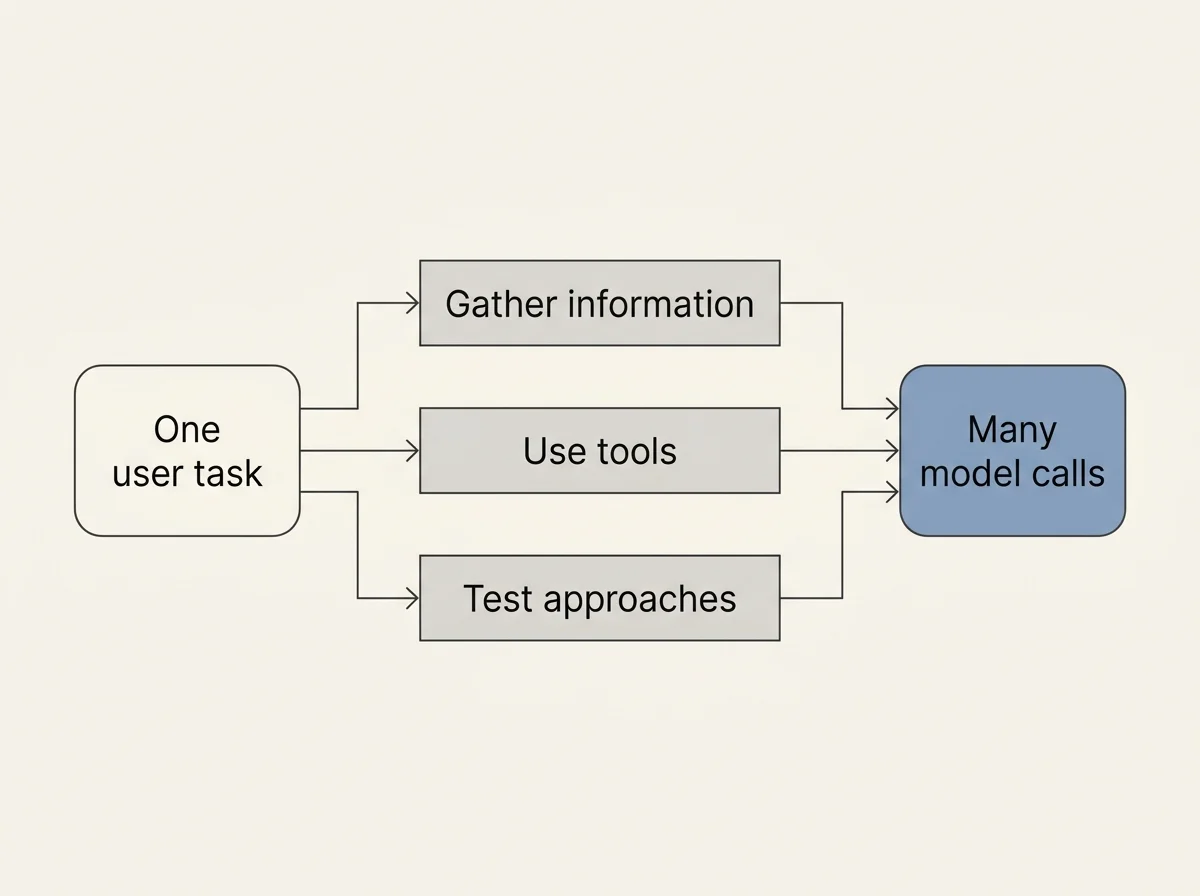
Because one task can trigger many model calls, a fivefold gap in token price compounds in agent workloads far more than in a single chat reply. AWS notes that an agent completing a task may need to gather information, use tools and test different approaches, and each step is a call. The cost consequence is my analysis, not a sourced number, since the coverage contains no per task cost.
That is why OpenAI’s new always-on Dots agents, the company’s other launch today, are relevant here: always-on agents are a use case where cheap model calls matter.
How can you test the GPT-6.1 Sol claim on your own workload?
Start with arithmetic. Multiply your current monthly Astra spend by 0.2, and treat the result as the ceiling of the claimed saving, not the saving itself. Real savings depend on whether Astra tasks can move to GPT-6.1 Sol without extra retries or review time, and the coverage has no data on that.

- Run a sample of your real coding, document and multi-step workflow tasks on both models.
- Count retries, failed runs and human review time on each, since retries eat into the price advantage.
- Subtract the cost of any quality gap from the ceiling. What remains is your saving.
Judge the result on cost per accepted task, not on the headline ratio. OpenAI said Perplexity trusts Astra with its production systems, per our earlier report on Perplexity and GPT-6 Astra, so leaving it means trading a known quantity for a cheaper one.
Why is GPT one of the fastest-rising subjects in AI news?
GPT is running at 45 times its usual mention rate on the news wire today: 30 mentions against a normal 0.67 per day, across 10 sources. It appears alongside GPT-6, Astra and GPT-6.1, and Qwen shows up in the same cluster, though that is a co-occurrence in the data and nothing in the coverage ties it to this launch. Five sources corroborate the story at publication time.
What should you watch after the GPT-6.1 Sol launch?
Treat any single price point on this line as provisional. BriefFlash earlier covered the temporary 50 percent discount on GPT-5.6 Sol through September 18 and the ultrafast mode preview on GPT-5.6 Sol at 750 tokens per second. Pricing on this model line has moved repeatedly, and a launch ratio is a snapshot.
Four things would settle the question: independent benchmarks that define near, published dollar prices, clarity on whether the ratio holds for cached, batch or Bedrock pricing, and retry data from teams that migrate.
Frequently asked questions
Is GPT-6.1 Sol as good as GPT-6 Astra?
OpenAI says GPT-6.1 Sol delivers near-Astra intelligence for coding, computer use and professional work, which is not the same as equal intelligence. The launch coverage contains no benchmark names, scores or independent tests, so the size of the gap to GPT-6 Astra is unknown. Test it on your own tasks before treating near as close enough.
What does one-fifth of Astra’s price actually mean?
OpenAI says GPT-6.1 Sol costs one-fifth of GPT-6 Astra’s standard API input and output token prices. The comparison is to Astra, not GPT-6 Sol, so it does not mean the model is five times cheaper than the previous Sol. The coverage gives no dollar prices.
Where can I use GPT-6.1 Sol today?
AWS states that GPT-6.1 Sol is generally available on Amazon Bedrock, aimed at coding, computer use and professional workloads. OpenAI announced the model on September 29, 2026. The coverage does not confirm availability on other cloud platforms, and Bedrock pricing should not be assumed to match OpenAI’s API pricing.
Should I switch from Astra or GPT-6 Sol to GPT-6.1 Sol?
Test before switching. Multiply your monthly Astra spend by 0.2 for the ceiling of the claimed saving, then subtract the cost of retries, review time and any quality gap found on real tasks. The claims are OpenAI’s, and no independent benchmark has appeared.