
Researchers reportedly raced to get ahead of AI systems on a proof connected to the Unique Games problem, according to a feature published on 7 October 2026. The unique games proof AI story has reached BriefFlash through a single source, and we hold only its headline and date, so nothing here is independently confirmed.
That means we cannot say who the researchers are, which AI system was involved, what it produced, or whether any proof has been checked and accepted. What we can do is explain the problem, read the headline’s wording closely, and offer a checklist for judging any claim that AI is near a major proof. Where we reason beyond the headline, we label it as BriefFlash analysis.
What does the report actually say?
Very little, and it can be stated in a few lines. A feature published on 7 October 2026 reportedly describes researchers racing AI to a proof on Unique Games. The wording implies that AI systems were approaching a result on the problem, but we do not know what the AI did.
The headline’s verbs carry much of the weight. Closed in and raced are a journalist’s framing, and they can describe very different situations. Closed in could mean early partial results or a nearly complete argument, and a race implies a competition that may exaggerate how close any system really was. We are not saying that happened here, only that the headline cannot settle it.
The headline also uses the word proof, while this problem has long been discussed as a conjecture. We do not state that it has been proven, and we do not say who proved it, because we have no basis for either claim.
What is the Unique Games problem?
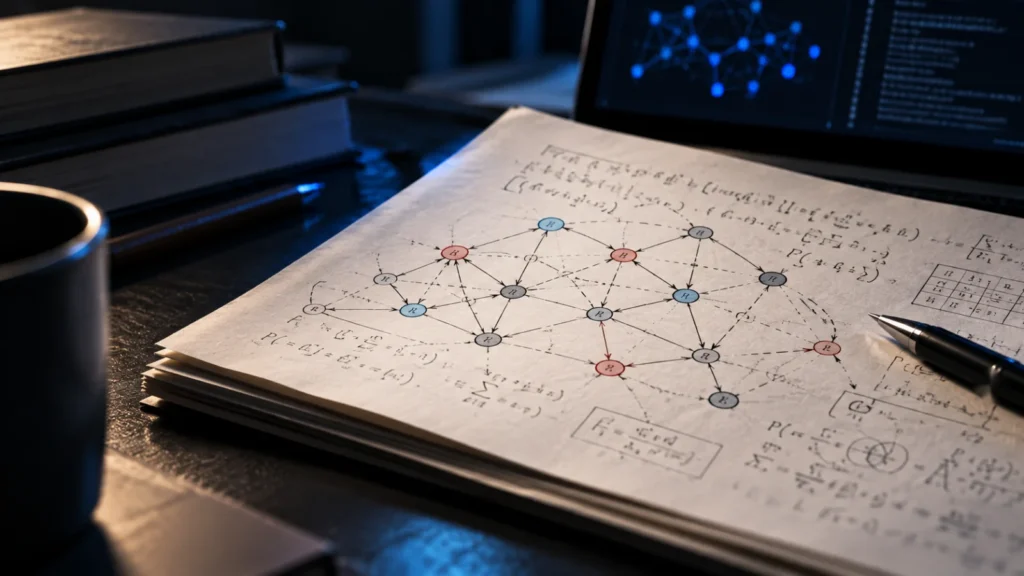
It is a problem in theoretical computer science about whether a certain kind of puzzle can be solved approximately by efficient methods. The puzzles are constraint-satisfaction problems: a set of choices to make and a set of rules, each rule linking a pair of choices. In the unique games version, each rule is strict, so once you fix the first choice, the rule allows exactly one value for the second.
Finding a perfect assignment can be hard, so the practical question is how close to the best possible score an efficient method can guarantee. Theorists care because the answer is closely tied to what is known about how hard many optimisation problems are to approximate. The problem has long been discussed as a conjecture, meaning a statement that specialists take seriously but that is not established.
Unique games proof AI: what is reported and what is not
The reported part is a date, a headline and an implication; everything about the substance is open. The graphic below separates the two, because the gap between them is the real story at this stage.
What would closing in on a proof mean, and what would it not?
It would not necessarily mean an AI system produced a finished, verified proof. AI can enter mathematical work in several ways: suggesting ideas, searching for candidate proofs, or checking proofs written in a formal language. These are different claims, and the headline does not say which one applies.
Our reading, offered as analysis and held with low confidence, is that the strongest version of the claim, an AI system generating a complete and verified argument on a prominent open problem, is the one that would need the most evidence. The weaker versions, such as AI suggesting a promising approach, would be a different kind of story. For the wider question of what each role would imply, see a plain-language look at whether AI is the end of math as we know it.
Why are proofs a good test of AI claims?
Because a proof can be checked by people other than its author. In mathematics, a claim is settled when specialists examine the argument and find that it holds, not when someone announces it. Some proofs can also be written in a formal language that software verifies line by line.
That makes this area unusual. Many AI claims rest on judgement, benchmarks or demonstrations that are hard to audit. A claim about a proof is closer to pass or fail, which is why a race story like this one deserves to be tested rather than simply repeated.
How should you read a report that AI is near a major proof?
Ask who checked the result and what the system actually did. The five questions below apply to this story and to any similar one:
- Who verified it? Look for specialists outside the team that made the claim.
- What was the human contribution? Prompting, selecting outputs and supplying the key idea are different from running unaided.
- What did the system produce? An idea, a search result, a formal check or a full argument are not interchangeable.
- Is it the whole statement or a partial result? Progress on a special case is not a proof of the general claim.
- Has the result been accepted by specialists in the field, or only announced?
None of these can be answered from a headline. They are the reason BriefFlash will not call this a milestone for AI or for mathematics on the evidence in hand.
What we do not know yet
- The names and institutions of the researchers, and the timeline of the race.
- Which AI system or lab was involved, and what it produced.
- Whether a proof exists, has been checked, or is accepted by specialists.
- Whether the headline’s competitive framing reflects how the work actually unfolded.
The next useful development would be a statement from the researchers or independent specialists about what was verified and by whom. Until then, treat the race as reported and the result as unestablished. Readers who want the wider frame can start with our look at whether AI is the end of math as we know it.
Frequently asked questions
What is the Unique Games problem?
It is a theoretical computer science problem about approximately solving a certain kind of constraint puzzle, where each rule fixes exactly one allowed value for a second choice once the first is set. Its answer is closely tied to how hard many optimisation problems are to approximate, and it has long been discussed as a conjecture.
Has an AI system actually proved something about Unique Games?
BriefFlash cannot say. A feature reportedly describes researchers racing AI toward a Unique Games proof, but we hold only its headline and date. That does not establish that a proof exists, that any AI system produced one, or that specialists have checked and accepted it.
How are AI systems used in mathematical research today?
In general terms, they can suggest ideas or approaches, search for candidate proofs, or check proofs written in a formal language. These are separate roles with separate evidence. Success in one does not show an AI system can generate a complete, verified proof end to end.
How do mathematicians verify a proof?
Other specialists read the argument and check each step, and a proof written in a formal language can also be checked mechanically by software. A proof counts once it survives that scrutiny, whoever or whatever produced it, which is why announcements alone do not settle a mathematical claim.
Why would researchers race AI to a result?
BriefFlash does not know the researchers’ motives, and the headline implies a competition without describing it. A race framing may reflect real competitive pressure or may overstate how close any AI system was. Without names, dates or details, the reasons remain unconfirmed.