

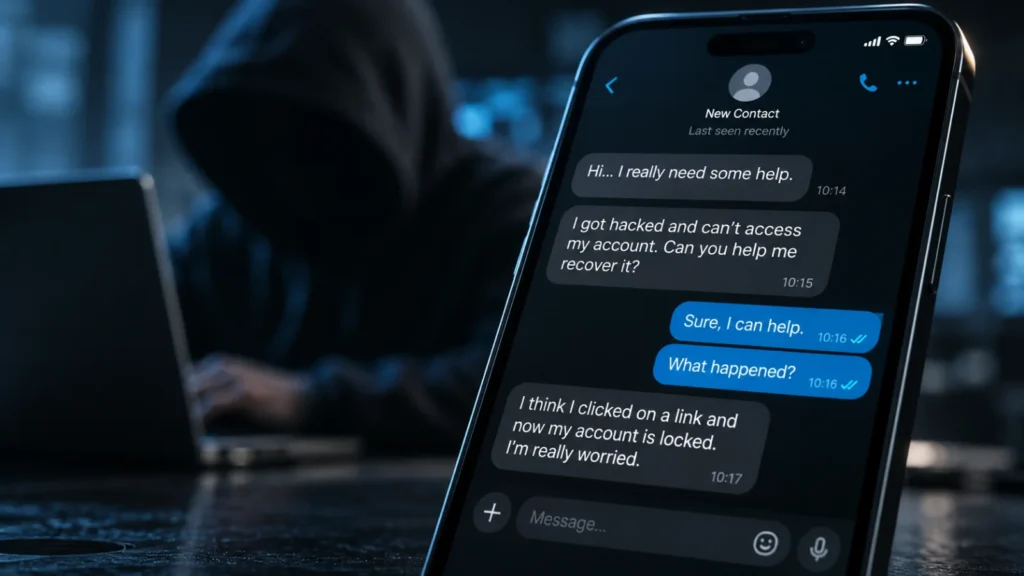
Anti-cybercrime initiatives are reportedly using AI to scam the scammers, deploying lifelike bots that criminals believe are real victims. Put simply, AI bots scam the scammers by taking the place of the person a fraudster hopes to find: a target who answers, stays in the conversation and looks worth the effort.
The tactic matters because fraud is largely a numbers game. Criminals contact many people and spend real effort only on the few who respond, so a convincing decoy could, in principle, make that effort wasteful. The catch is that the reporting behind this story is thin. It describes the approach and offers no measurement of results, which is why BriefFlash treats the claim as unproven.
How do AI bots scam the scammers?
According to the report, they pose as victims. Initiatives are increasingly tricking criminals into conversations with lifelike bots, and the criminals reportedly believe they are talking to a real person. That is the full extent of what the report establishes about the mechanism.
The word lifelike carries most of the weight. In general terms, a bot like this relies on a language model that can hold a believable conversation over time, rather than a fixed script that breaks when the other side goes off-pattern. That is background, not something the report spells out.
The idea itself is not new. Wasting a scammer’s time or collecting their methods is a known tactic called scam baiting, usually carried out by volunteers or researchers. What the report describes is, in effect, that work being handed to software. This comparison is general background; the report as summarised does not draw it.
Why a scammer’s attention is the real target
The scarce resource in a scam operation is probably attention, not messages. Sending a message costs a criminal almost nothing, but working a reply costs time, and that time only pays off if the reply comes from a real person with money or access. This is BriefFlash’s reasoning, not a finding from the report.
Follow the inference. If a bot answers like a real target, each reply a criminal receives becomes a less reliable sign of a genuine victim, and sorting real from fake costs more time. Time spent on a bot is time not spent on a real person. We are fairly confident in the logic and not at all confident in the scale, because the report gives no figure for how many criminals engaged, how long they stayed or what happened next.
What would count as evidence that the tactic works?
Three outcomes would count, and none is reported yet. We think a claim that AI is getting good at this should be tested against time absorbed, information gathered and operations disrupted. The table sets each against what the available reporting supplies.
| Test of success | What it would show | Status in the reporting |
|---|---|---|
| Time absorbed | How long criminals stayed engaged with a bot | No figures given |
| Information gathered | Methods, scripts or accounts learned from the exchange | Not stated |
| Operations disrupted | Scam activity actually interrupted or shut down | Not stated |
| Detection rate | How often criminals recognised the bot | Not stated |
One more test is easy to overlook: whether real victims were reached less often. Wasting a criminal’s hours is satisfying, but engaging a scammer does not by itself stop fraud or protect real people.
What we do not know yet
The reporting does not name any initiative, organization, tool or country. It gives no numbers on how many scammers engaged, how long they stayed or what followed. It does not say whether scammers can tell they are talking to a bot, whether criminals are using AI in response, or how the approach compares with older, human-run scam baiting. A headline says AI is getting really good at this, but the summary offers no measurement behind that characterization.
What are the risks of running deceptive bots at scale?
Three open questions stand out, and the report answers none of them.
- Detection. If criminals learn to spot the bots, the tactic may lose value. Whether that is already happening is unknown.
- Rules. Deceiving anyone, even a criminal, raises legal and ethical questions, including what limits apply and who is accountable for what a bot says. The report does not address them.
- Misuse. The ability to hold a believable conversation is not limited to defenders. Nothing available says what safeguards govern these bots.
What should readers and security teams do now?
Treat this as an idea to watch, not a defence to rely on. Nothing in the reporting suggests that bots run by others reduce your own exposure. As general guidance, not drawn from the report: pause on any unexpected request for money, codes or credentials, verify it through a channel you already trust, and be wary of pressure to act quickly.
Security-minded readers weighing a vendor or initiative that makes similar claims can ask three things: what was measured, who measured it, and over what period. Until a named initiative publishes figures on time absorbed, information gathered and operations disrupted, the claim stays a promising description rather than a result.
Frequently asked questions
What does it mean to scam the scammers with AI?
It means using AI bots that pose as real victims so criminals spend their time talking to software. According to reports, anti-cybercrime initiatives are increasingly doing this with lifelike bots that criminals believe are genuine targets. The aim, in general terms, is to waste criminals’ time or learn how they work, though no results have been reported.
Does using AI bots to scam scammers actually stop fraud?
No reported evidence shows that it does yet. Reports describe the tactic but give no figures on how many scammers engaged, how long they stayed or what followed. Engaging a criminal does not by itself protect real victims, so the useful measures would be time absorbed, information gathered and operations disrupted.
Can scammers tell they are talking to a bot?
That is unknown. The available reporting does not say whether criminals can detect these bots or whether they are using AI in response. If criminals learn to spot decoys, the tactic could lose value, which is why any claim of success should include how often the bots were detected.
How can I protect myself from scams?
Bots run by anti-cybercrime groups do not change your own exposure, so rely on habits. As general guidance, pause on unexpected requests for money, codes or credentials, verify the request through a channel you already trust, and be wary of pressure to act quickly. Do not engage suspected scammers out of curiosity.