
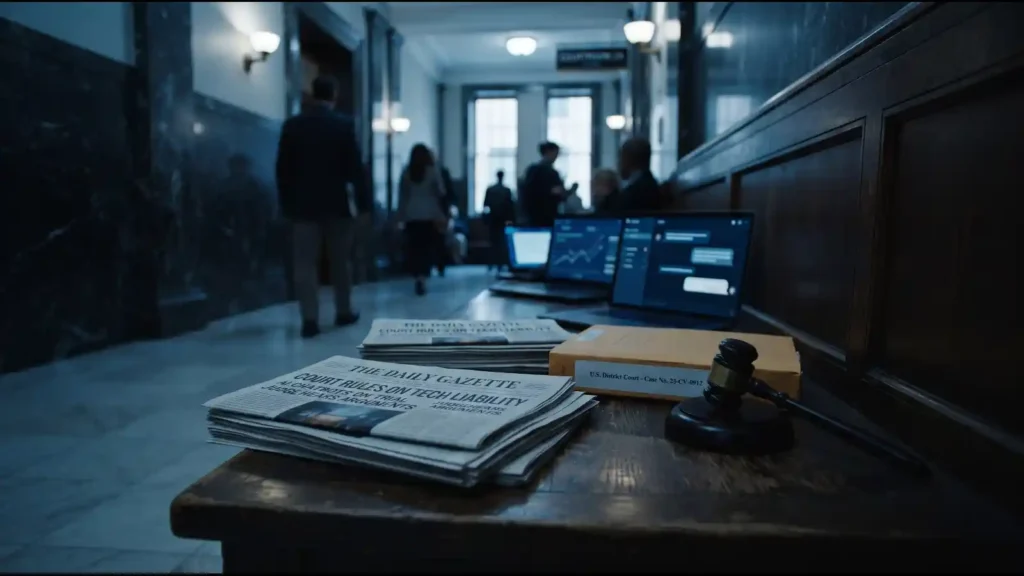
The Seattle Times and Newsday sued OpenAI and Microsoft on September 4, 2026, becoming the latest news organizations to accuse the two companies of building AI products on top of journalism they never paid for. The federal complaint, filed in the Southern District of New York, alleges copyright infringement and trademark dilution tied to how ChatGPT, Microsoft Copilot, and Bing's AI features were trained and are still operated.
The suit follows a legal trail that started with The New York Times' case against OpenAI and Microsoft in December 2023, a case that is still working through the courts nearly three years later. What makes this filing worth a second look isn't the legal theory, which by now is familiar. It's the fact that Microsoft and OpenAI have previously put money into Seattle Times journalism programs, turning a funder into a defendant in the same complaint.
Quick Take
- The Seattle Times and Newsday filed a federal copyright and trademark lawsuit against OpenAI and Microsoft on September 4, 2026, in the Southern District of New York.
- The complaint accuses both companies of scraping paywalled articles to train and run ChatGPT, Copilot, and Bing's AI features, and asks the court to force destruction of any models or datasets built from that content.
- It's the latest in a string of publisher suits against OpenAI and Microsoft that started with The New York Times in December 2023, and it's an awkward one, since Microsoft and OpenAI have previously funded Seattle Times journalism programs.
What the Lawsuit Alleges
The Seattle Times Co. and Newsday, a daily paper based in Long Island, New York, filed suit against OpenAI and Microsoft on Friday, September 4, 2026, in the U.S. District Court for the Southern District of New York.
The complaint, reported to run 38 pages, alleges the companies scraped both papers' websites, including content behind paywalls, and folded those articles into training data used to build and operate ChatGPT, Microsoft Copilot, and Bing's AI features. It also brings a trademark dilution claim, arguing the companies' models sometimes generate fabricated content and falsely attribute it back to the Seattle Times and Newsday.
The suit describes generative AI as "a snake eating its own tail," language meant to argue that AI generated summaries compete directly with, and could eventually hollow out, the newsrooms whose reporting trained the models. It also cites industry data claiming search referral traffic to midsize publishers fell roughly 47 percent year over year, tying that decline to AI answers replacing clicks to original articles.
The papers are seeking unspecified damages plus a court order requiring destruction or impoundment of any copies, training datasets, or models built on their work. Seattle Times president and CEO Alan Fisco told staff in an email that the decision to sue "was not an easy decision," and that the company has to protect content it spends millions of dollars a year producing.
Microsoft, in a statement, said it was surprised by the suit and is "always happy to sit down and explore solutions to this type of dispute." OpenAI said its models are trained on publicly available information and grounded in fair use.
Why It Matters
This isn't a novel legal theory. The New York Times opened this fight against OpenAI and Microsoft back in December 2023, and that case is still working through discovery almost three years later. Since then, publishers including CNN have filed their own claims against AI companies, and this is just the newest entry.
What stands out is the relationship. Microsoft and OpenAI have previously funded Seattle Times journalism fellowships and projects, according to TechCrunch's reporting, which makes this less a stranger suing a stranger and more a funder turned defendant. This suit also lands just days after Apple's trade secrets case against OpenAI made headlines, another sign of how much of OpenAI's calendar is now taken up by litigation. And the destruction remedy the papers are asking for, rather than just damages, mirrors what the Times sought and suggests publishers are trying to raise the cost of unlicensed training rather than settle for a one time payout. That said, OpenAI has also been posting real commercial numbers on the content it distributes, including a $1 billion run rate for ChatGPT Ads, which is exactly the kind of monetization publishers point to when they argue their reporting is subsidizing someone else's revenue.
What to Watch
Watch whether OpenAI and Microsoft move to consolidate this case with the New York Times litigation, since the claims overlap heavily. Also watch whether more midsize regional papers file similar suits instead of pursuing licensing deals, which would signal that publishers increasingly see litigation as better leverage than negotiation. A motion to dismiss, if one comes, will be the next real test of how courts are treating the fair use defense after nearly three years of the Times case grinding forward.
Key Takeaways
- The Seattle Times and Newsday sued OpenAI and Microsoft on September 4, 2026, in the Southern District of New York, alleging copyright infringement and trademark dilution.
- The complaint seeks destruction of any AI models or training datasets built on the papers' work, not just monetary damages.
- It's at least the fourth major U.S. publisher suit against OpenAI and Microsoft since The New York Times filed in December 2023.
- Microsoft and OpenAI had previously funded Seattle Times journalism programs, making this a funder-turned-defendant situation.
FAQ
What is Newsday and why is it named alongside the Seattle Times in this lawsuit?
Newsday is a daily newspaper based in Long Island, New York. It filed as a co-plaintiff alongside the Seattle Times in the same September 4, 2026 complaint, even though the two papers are separately owned and based on opposite coasts.
Is this the first time a news organization has sued OpenAI and Microsoft over AI training?
No. The New York Times filed the first major suit of this kind against both companies in December 2023, and that case is still ongoing. Other publishers, including CNN in a separate case against Perplexity, have since filed related claims.
What are the Seattle Times and Newsday asking the court to do?
Beyond unspecified monetary damages, the complaint asks the court to order destruction or impoundment of copies of their work, along with any training datasets or AI models built using it.