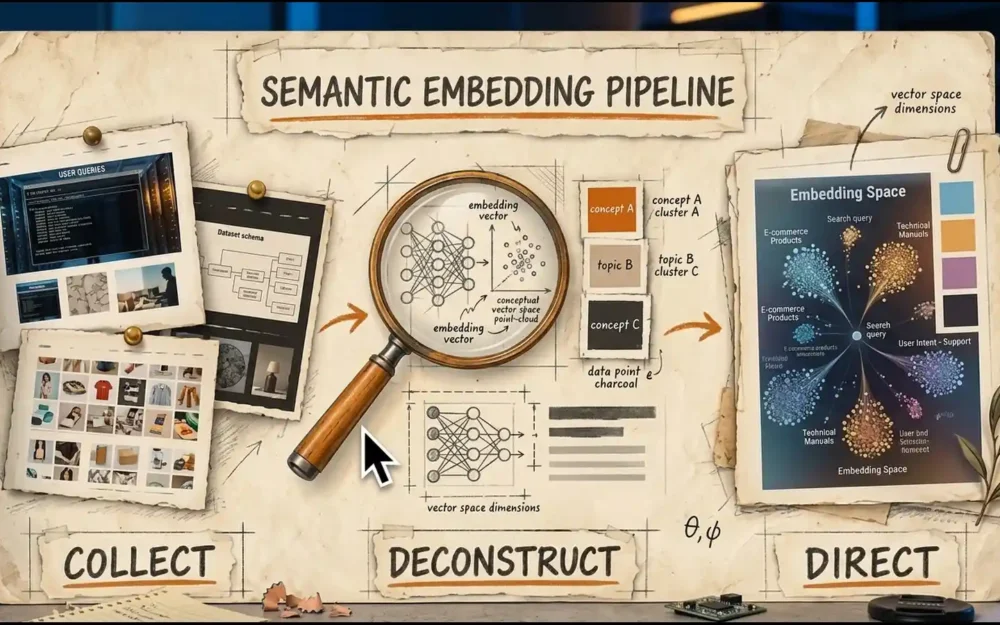
Google Research says its new Retrieve-for-Train framework trains AI search’s query decomposition once, offline, instead of reasoning through it live, cutting fan-out latency from nearly 50 seconds to under a few, per its own benchmarks.
Join BriefFlash readers. Daily AI news delivered to your inbox every morning — fast, accurate, no noise.
Now check your email to confirm your subscription.
AI Models include the latest large language models (LLMs) and generative AI systems from OpenAI, Anthropic, Google, Meta, xAI, Mistral, Qwen, and other leading AI companies. Explore model releases, benchmarks, comparisons, performance analysis, and expert insights to stay informed about the rapidly evolving AI ecosystem.
BriefFlash covers GPT, Claude, Gemini, Llama, Grok, Mistral, Qwen, DeepSeek, and many other AI models, helping developers, businesses, researchers, and AI enthusiasts understand the capabilities and real-world applications of each model.
Google Research says its new Retrieve-for-Train framework trains AI search’s query decomposition once, offline, instead of reasoning through it live, cutting fan-out latency from nearly 50 seconds to under a few, per its own benchmarks.
Google’s Gemini 3.8 Live and Gemini 3.8 Live Extended Thinking models went live on Vercel’s AI Gateway on September 15, 2026, but Google’s own documentation hasn’t caught up to the name yet.
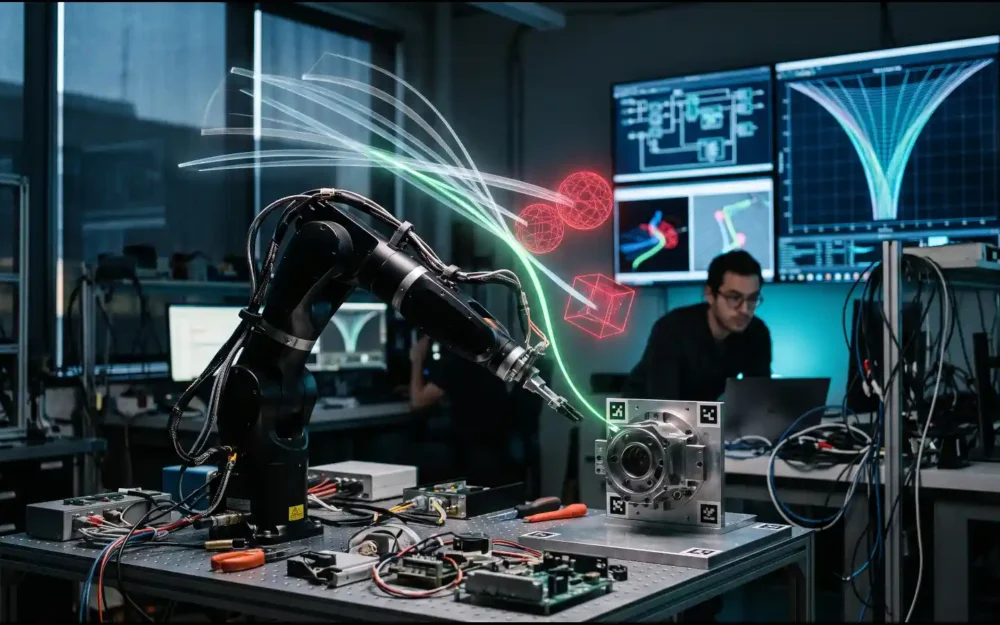
MIT researchers built an algorithm called HardFlow that lets pretrained generative AI models satisfy strict safety and physical constraints without retraining, hitting perfect constraint satisfaction across four simulated benchmark tasks against six rival methods.
OpenAI published a customer story saying Perplexity now trusts GPT-6 Astra to write communications, edit production code, and monitor live systems with much less check-in than earlier models needed.
OpenAI has paused new sign-ups and upgrades to its $200-a-month ChatGPT Pro plan after demand for its Astra model strained the company’s infrastructure. Existing Pro subscribers are unaffected.
Anthropic’s new threat intelligence report says five China-based AI labs ran nearly 200 million Claude exchanges tied to illicit distillation, with Alibaba’s campaign alone topping 151 million, a sharp jump from the numbers Anthropic gave the Senate in June.
Opaque recurrence, the reasoning technique reportedly built into OpenAI’s Astra model, is suddenly everywhere in AI safety conversations. Here’s what the term actually means, what OpenAI has and hasn’t confirmed, and a few more pieces of AI jargon worth knowing this month.
OpenAI has released GPT-6 Astra, its most capable model yet and the first to cross its own Critical cybersecurity threshold, while president Greg Brockman declares an ‘AGI era’ that independent analysts call premature.
OpenAI released GPT-6 Astra on September 3, 2026, its most capable computer-use model yet. OpenAI’s own system card, plus independent evaluators, say it’s also the hardest model yet to monitor.
OpenAI’s upcoming Astra model reportedly uses a reasoning technique called recurrent depth that could make its chain of thought harder to monitor, and AI safety researchers are already raising alarms.