
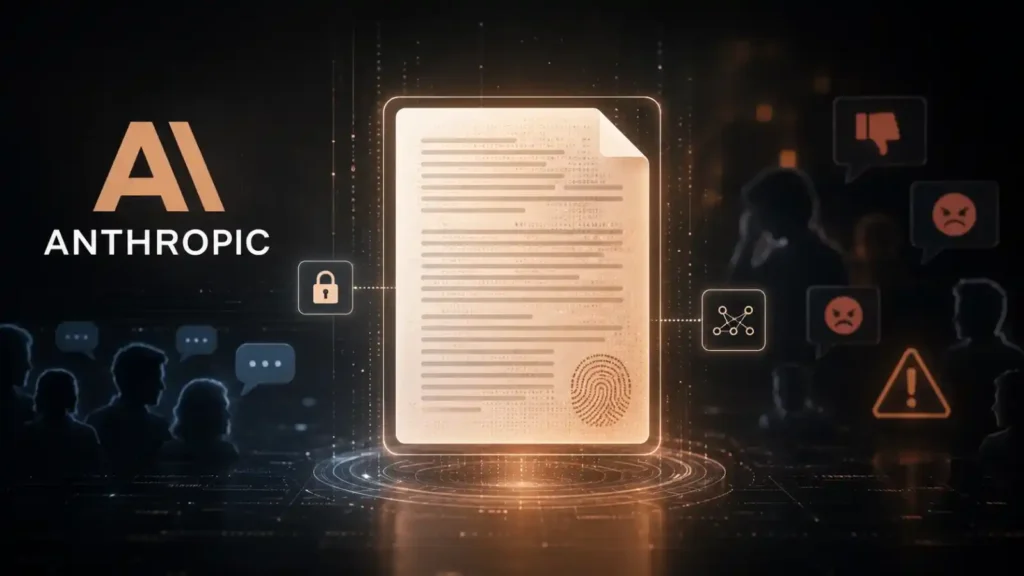
In a move designed to promote transparency and accountability in artificial intelligence, Anthropic has introduced a new watermarking system for its Claude AI models. However, the rollout has triggered a wave of backlash, as some Claude users are mad that the invisible markers will catch them using it at their jobs, classes, and other unauthorized environments. The debate highlights the growing friction between AI developers attempting to enforce ethical use and individuals relying on generative AI to expedite their daily tasks.
The frustration has largely spilled out across social media platforms, particularly on Reddit, where some Claude users have taken to forums to complain that the new tracking mechanism is a travesty. According to a report published by TechCrunch, the watermarking system is designed to embed invisible cryptographic signatures into text generated by Claude. For professionals and students who pass off AI-generated work as their own, this development represents a significant disruption to their workflow. (See also: Model ML Completes Finance Work More Efficiently with GPT-5.6 Sol)
Anthropic's initiative reflects a broader industry trend toward traceable AI outputs. As generative models become increasingly sophisticated, distinguishing between human-written and machine-generated text has become a critical challenge for educators, employers, and platform moderators. While Anthropic frames the watermarking as a necessary safeguard against misinformation and academic dishonesty, critics argue it compromises user privacy and limits the practical utility of the free AI tools they have come to rely on. (See also: With Feel for Physics: MIT CSAIL’s GeoPT Model Simulates Real-World Dynamics)
Related coverage: Anthropic’s Annualized Revenue Surges to $65B, Adding $18B in Just Two Months
Key Takeaways
- Anthropic has deployed a new watermarking system for its Claude AI models to embed invisible cryptographic signatures in generated text.
- Some Claude users are mad that the watermarks will catch them using the AI at their jobs and classes, taking to social media to complain.
- The system aims to combat academic dishonesty and unauthorized workplace use, aligning with broader industry trends in AI traceability.
- The backlash highlights the ongoing tension between AI developers' safety protocols and users' desires for unrestricted, anonymous AI assistance.
The Technology Behind Anthropic's Watermarking System
Anthropic's new watermarking mechanism operates by subtly altering the statistical distribution of words and tokens generated by Claude AI. Unlike visible watermarks, which overlay an image or text with a visible logo, these cryptographic signatures are imperceptible to human readers. However, they can be detected by specialized software designed to scan for the specific token patterns.
This approach allows platforms, employers, and academic institutions to verify whether a piece of text was generated by Claude. The system is currently being integrated into Anthropic's API and consumer-facing interfaces. By embedding these markers, Anthropic provides third-party auditors with the tools necessary to track the provenance of digital content. This move is part of a larger strategy to ensure that AI-generated text remains traceable, even as models become capable of producing highly human-like prose.
Backlash on Social Media and Reddit
The announcement of the watermarking system has not been well-received by all segments of the user base. Specifically, some Claude users are mad that Anthropic’s new watermarks will catch them using it at their jobs, classes, and other environments where AI assistance is either prohibited or frowned upon. According to Lucas Ropek at TechCrunch, individuals have taken to social media to voice their frustrations, arguing that the system is an overreach.
On platforms like Reddit, the discussion has been particularly heated. Threads discussing the Claude usage issue today are filled with complaints from users who feel that Anthropic is acting as a 'digital policeman.' Some users argue that the watermarking system disproportionately affects those who use Claude free AI tiers, as they may not have the option to opt out or pay for enterprise-level privacy. The sentiment on some Claude users Reddit threads suggests a growing anxiety about the surveillance of AI-assisted workflows.
The Ethical Divide: Transparency vs. Privacy
The introduction of watermarking forces a critical conversation about the ethics of AI deployment. On one side, Anthropic and other AI developers argue that traceability is essential for maintaining trust in digital ecosystems. AI-generated text can be used to spread misinformation, commit academic fraud, or automate spam. By implementing watermarks, Anthropic provides institutions with a defensive tool to verify content authenticity.
Conversely, privacy advocates and frustrated users argue that watermarking infringes on user autonomy. If an employee uses Claude to draft routine emails or brainstorm ideas, should their employer be notified? The lack of clear boundaries regarding when and how watermark detection will be applied is a primary driver of the current backlash. This tension underscores the difficulty of balancing AI safety protocols with user expectations of privacy.
Industry Impact and Future Implications
The deployment of watermarking technology by Anthropic is likely to set a precedent for the broader AI industry. Competitors like OpenAI and Google DeepMind have also explored various forms of content provenance and watermarking. As regulatory bodies worldwide begin to draft legislation around AI transparency, cryptographic watermarking may soon transition from a voluntary safety measure to a legal requirement.
For enterprises, this development means that relying on AI for internal documentation or external communications will require new governance policies. Organizations will need to decide whether to permit the use of watermarked AI tools or restrict them to specific, audited workflows. Furthermore, the backlash from some Claude users highlights a market opportunity for AI providers that prioritize absolute privacy—though such models may face increased scrutiny from regulators.
Navigating the New AI Traceability Landscape
As AI models become more embedded in daily workflows, the friction between detection and evasion will only intensify. Anthropic's watermarking system represents a significant step toward accountable AI, but it also reveals the uncomfortable reality that many users have grown accustomed to operating in a gray area of AI assistance. Educational institutions and workplaces are now better equipped to identify AI-generated content, forcing users to reconsider how they integrate tools like Claude into their routines.
Ultimately, the anger expressed by some Claude users may be a fleeting reaction to a structural shift in the AI ecosystem. As watermark detection becomes standardized, the expectation of anonymous AI generation will likely diminish, replaced by new norms of transparent human-AI collaboration. For now, users who rely on Claude for unauthorized assistance are on notice: their digital footprints are about to become a lot more visible.
Key Takeaways
- Anthropic has introduced a new watermarking system for its Claude AI models that embeds invisible cryptographic signatures into generated text.
- Some Claude users are mad that the new watermarks will catch them using the AI at their jobs and classes, sparking complaints on social media.
- The system is designed to combat academic dishonesty and unauthorized workplace use by making AI-generated text traceable.
- The backlash highlights the ongoing tension between AI developers enforcing safety protocols and users desiring unrestricted, anonymous AI assistance.
FAQ
What is Anthropic's new watermarking system for Claude AI?
Anthropic's new watermarking system is a technology that embeds invisible cryptographic signatures into text generated by Claude AI. These signatures are imperceptible to human readers but can be detected by specialized software to identify whether a piece of text was created by the AI.
Why are some Claude users mad about the new watermarks?
Some Claude users are mad because the watermarking system will catch them using Claude AI at their jobs and classes where AI assistance may be unauthorized or prohibited. Users feel this is an invasion of privacy and limits their ability to use the tool without being tracked.
How does the Claude watermarking system work?
The system works by subtly altering the statistical distribution of words and tokens generated by the Claude AI model. This creates a unique pattern that acts as a digital watermark, which can be scanned and detected by third-party auditing software.