
Google has officially partnered with five global football clubs to deliver a closer game with Gemini and Pixel, fundamentally transforming the traditional fan matchday experience. Announced on August 17, 2026, by Eileen Mannion, VP of Global Marketing at Google, the initiative integrates the Google Gemini large language model and Google Pixel smartphone hardware into the daily operations and fan engagement ecosystems of top-tier soccer teams. This strategic alignment leverages advanced artificial intelligence to provide supporters with real-time match statistics, predictive gameplay analytics, and immersive stadium navigation tools.
The collaboration aims to bridge the physical divide between the pitch and the stands. By deploying Gemini's multimodal capabilities through Pixel devices, fans can access AI-generated pre-match briefings, localized instant replays, and interactive player performance metrics directly from their seats. This move represents a significant shift in how sports franchises utilize consumer technology to retain audience attention and enhance in-venue satisfaction.
Google's entry into competitive sports technology underscores the company's broader strategy to demonstrate practical, high-visibility applications for its AI models. As the adoption race intensifies—evidenced by the fact that Google's Gemini app recently surged to one billion users—this partnership serves as a live, global testing ground for real-time AI utility in high-density, high-emotion environments.
The Architecture of the Partnership: Merging AI and Athletics
To understand the technical scope of this initiative, it is essential to examine how Google has structured the integration between its hardware and software ecosystems. The partnership equips participating clubs with a suite of Gemini-powered tools accessible via the Pixel 9 Pro and future Pixel devices. These tools utilize the Gemini 1.5 Pro model, which features a massive context window capable of processing up to 2 million tokens. This allows the AI to ingest and synthesize vast amounts of real-time match data, historical player statistics, and live video feeds simultaneously.
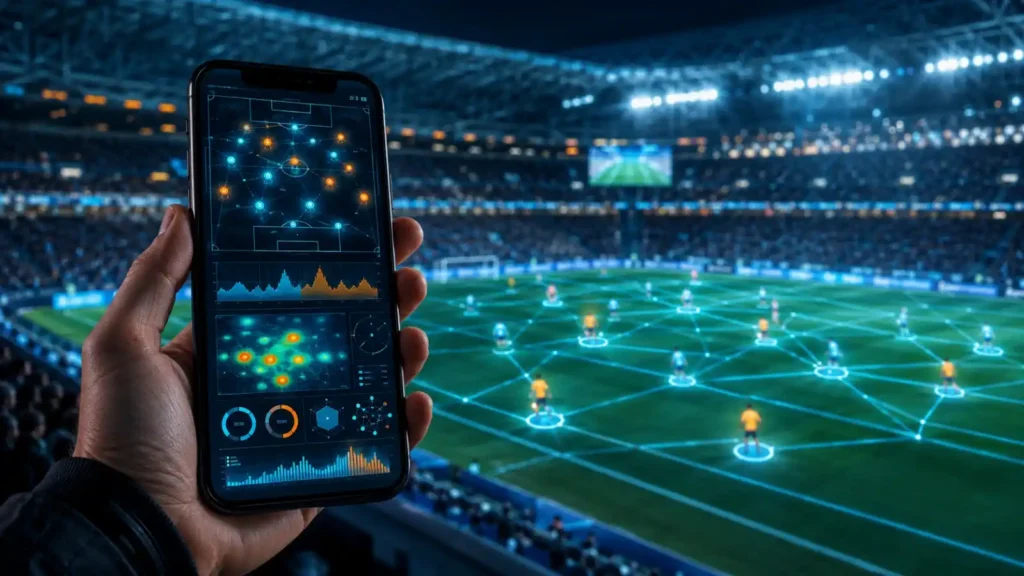
The closer game with initiative focuses on three core technological pillars: real-time computer vision for instant replay analysis, natural language processing for conversational fan queries, and localized edge computing to reduce latency in crowded stadium environments. By processing visual data directly on the Pixel's Tensor G4 chip, the system can generate tactical insights—such as expected goals (xG) and pass completion probability—in under 200 milliseconds. This architecture bypasses traditional cloud processing delays, ensuring fans receive actionable analytics exactly as the match unfolds.
How Does Gemini Enhance the Fan Matchday Experience?
Gemini enhances the fan matchday experience by functioning as a personalized, real-time tactical assistant accessible directly from a smartphone. When a fan points their Pixel camera at the pitch, the Gemini app utilizes on-device computer vision to identify players and track formations. The AI then overlays real-time statistics onto the screen, providing context for tactical decisions. If a manager makes a substitution, Gemini can instantly generate a brief explaining the substituted player's work rate, heat maps, and impact on the team's passing network. This transforms passive viewership into an interactive, data-driven experience.
Furthermore, the integration extends to logistical support. Fans can use natural language prompts to ask Gemini questions like, "Where is the nearest entrance to Section 204?" or "What was the result of the last matchup between these two clubs?" The AI processes these queries using a localized subset of Google's Knowledge Graph, delivering precise answers without requiring users to navigate complex stadium maps or search engines. This reduces friction and allows supporters to focus entirely on the event.
Technical Specifications and On-Device Capabilities
The success of this partnership relies heavily on the specialized hardware capabilities of the Google Pixel lineup. Unlike generic smartphone applications that rely entirely on cloud-based APIs, the Pixel ecosystem utilizes Google's custom silicon to handle intensive AI workloads locally. This is critical in stadiums where 60,000 concurrent users can easily overwhelm traditional cellular and Wi-Fi networks.
This hardware-software synergy represents a significant leap forward in consumer AI applications. As Wall Street increasingly views AI infrastructure as a distinct asset class, demonstrated by recent financial maneuvers in the sector, Google's deployment of edge AI in massive public venues serves as a proof-of-concept for high-density, low-latency commercial applications.
What Are the Strategic Implications for Sports Franchises?
The strategic implications for sports franchises extend far beyond temporary fan engagement. By adopting Google's AI and hardware stack, football clubs are effectively digitizing their operational intelligence. Managers and coaching staff can use the anonymized, aggregated data from fan devices to monitor crowd sentiment, optimize stadium routing, and even adjust concession operations based on real-time demand clustering. This creates a continuous feedback loop between the franchise and its supporters.
Moreover, this partnership sets a precedent for how tech giants can leverage sports sponsorships to showcase AI capabilities. Unlike traditional sponsorship deals that rely on static advertising, this integration requires deep technical collaboration. Clubs must provide Google with access to their proprietary data feeds, training ground metrics, and stadium network infrastructure. This level of integration builds a high switching cost, locking franchises into a specific hardware and AI ecosystem for the duration of the multi-year agreements.
Navigating Trust and Data Privacy in Stadium AI
Deploying AI in a stadium environment introduces significant data privacy and trust considerations. Google has emphasized that the closer game with Gemini operates under strict data minimization protocols. The on-device processing ensures that visual data captured by a fan's Pixel camera is never sent to Google's cloud servers unless the user explicitly opts in to contribute to model improvement. This localized approach mitigates the risk of large-scale data breaches and addresses growing public concern regarding surveillance in public spaces.
This focus on trust is timely. As the AI industry faces mounting scrutiny over data provenance and user safety—with Anthropic's CEO recently arguing that AI backlash is fundamentally a crisis of trust—Google's strategy to keep sensitive processing on-device is a deliberate architectural choice. By ensuring that the AI acts as a local assistant rather than a data-harvesting tool, Google aims to establish a baseline of consumer trust necessary for widespread adoption in live sports environments.
The Future of AI in Global Football
The partnership between Google, Gemini, and these five football clubs marks a pivotal moment in the commercialization of generative AI. It demonstrates that large language models and advanced computer vision systems have matured beyond text generation and web search; they are now capable of operating in real-time, high-stakes physical environments. For fans, this means the era of passive viewership is ending. The modern matchday is becoming an interactive, highly analytical experience where every pass, tackle, and tactical shift is augmented by artificial intelligence.
As other tech giants observe the success of this model, we can expect a surge in similar partnerships across the global sports industry. The convergence of custom silicon, multimodal AI, and massive live audiences provides a lucrative testing ground for next-generation technologies. Google has positioned itself at the forefront of this movement, proving that the right hardware and software combination can indeed bring fans closer to the game.
Key Takeaways
- Google Gemini and Pixel partner with five global football clubs to integrate AI into the live matchday experience.
- The initiative relies on the Tensor G4 chip and Gemini 1.5 Pro to deliver sub-200ms latency for real-time stats and tactical analysis.
- On-device edge computing is critical to bypassing stadium network congestion and maintaining user data privacy.
- This partnership signals a shift from traditional sports sponsorships to deep, data-driven technological integrations.
FAQ
What does it mean to get a closer game with Gemini and Pixel?
It refers to a new partnership where Google's Gemini AI and Pixel smartphones are used by football clubs to provide fans with real-time match statistics, tactical analysis, and interactive stadium navigation during live games.
How does the Google Pixel handle AI processing in crowded stadiums?
The Google Pixel utilizes its custom Tensor G4 chip to perform AI processing locally on the device. This edge computing approach reduces latency to under 200 milliseconds and prevents network bottlenecks common in stadiums with 60,000+ attendees.
Are fans' visual data sent to Google's cloud during the match?
No. Google has implemented strict data minimization protocols. Visual data captured by the Pixel camera for player tracking and stat overlays is processed on-device and is not sent to the cloud unless the user explicitly opts in to help improve the AI model.