Enterprises are in a shaky spot this month, caught between escalating calls from Anthropic and OpenAI for a coordinated AI slowdown and a fast growing appetite inside their own companies for cheaper, unregulated open source models out of China, according to reporting published by AI Business on September 15, 2026.
The tension crystallized over one week in September. Anthropic CEO Dario Amodei published an essay on September 12 urging the industry to slow the pace at which it improves model capabilities, days after OpenAI's chief global affairs officer called for mandatory federal safety rules and an Anthropic researcher's resignation post went viral with warnings about AI's extinction risk. China's foreign ministry dismissed the calls as fear mongering two days later.
I've covered enough of these safety versus competition fights to know the pattern by now. The loudest slowdown advocates are usually also the companies facing the steepest price competition, and this one arrives right as both labs eye historic IPOs. That doesn't make the underlying risk fake, but it does mean enterprises shouldn't take either side's framing at face value while deciding where to actually run their workloads.
Background
Anthropic's own alignment lead, Evan Hubinger, responded publicly the same week that he personally estimates the odds of AI causing human extinction within a decade at above 10 percent, a personal view rather than a company position.
That resignation landed on top of a July letter signed by more than 1,300 employees across OpenAI, Anthropic, Google DeepMind and Meta urging Washington to help coordinate a slower pace of AI development internationally. Hours after Coxon's post went viral, OpenAI's chief global affairs officer Chris Lehane published a statement on OpenAI's own site calling for mandatory, capability based national AI safety rules, a reversal from the company's earlier preference for voluntary commitments.
China's government was not persuaded. One day later, AI Business described the position this leaves enterprise buyers in, caught between an uncertain regulatory future and a fast growing menu of cheaper alternatives.
The Current Picture
What the Slowdown Camp Is Actually Proposing
Amodei's essay lays out a three step plan: give independent evaluators access inside frontier labs, coordinate safety standards among AI companies in democratic countries, then extend that coordination to authoritarian governments over time. He was explicit that pacing does not mean halting research, only slowing capability gains enough for alignment and testing work to keep up. Lehane's statement makes a parallel ask of Congress: standardized testing, independent assessments of the most advanced models, tougher cybersecurity requirements, and mandatory incident reporting, all before Congress adjourns in December.
Why Some Analysts Read This as Competitive Positioning
Not everyone takes the safety framing at face value. He argued the push looks less like altruism and more like an attempt to lock in an advantage over cheaper competitors right as both labs approach IPOs. Omdia's Lian Jye Su made a similar point to the outlet, describing the open weight surge as a genuine business risk for incumbents at exactly the wrong moment. Separately, investor Michael Burry and Meta's former chief AI scientist Yann LeCun made comparable arguments in public posts this week, calling the extinction warnings self serving.
The Open Source Alternative Enterprises Are Already Buying
While the safety debate plays out, the economics have already shifted, a trend Anthropic itself flagged in its own threat intelligence reporting on distillation activity tied to Alibaba, Moonshot AI and DeepSeek. Independent tracking of OpenRouter, a marketplace that routes API traffic across model providers, put combined Chinese provider share above 45 percent of weekly token volume by April 2026, according to a Q2 2026 market share report. By July, a separate pricing analysis estimated U.S. hosted models' share of that same marketplace had fallen to roughly 30 percent, down from about 70 percent a year earlier.
The price gap explains why:
Figures as compiled in July 2026 industry pricing comparisons. List prices change, and don't reflect enterprise discounts.
The adoption is already inside mainstream companies, not just developer forums. Fortune reported that Airbnb CEO Brian Chesky has said his company uses Alibaba's Qwen for customer service, Coinbase CEO Brian Armstrong said in June that routing staff to Moonshot's Kimi and Z.ai's GLM models cut the company's AI bill in half, and Cursor has said Moonshot's Kimi underpins its Composer 2 coding model.
Reality Check
Some of what's driving this debate is confirmed and on the record. Amodei's essay exists, Lehane's statement exists, and Coxon's resignation post and Hubinger's reply are both public and widely corroborated. What's not confirmed is Amodei's own timeline. His warning about rogue agent swarms threatening large parts of the internet within six to 12 months is his own projection, not an independently validated forecast.
I've watched this exact rhythm before: a safety warning from the same executives racing hardest, arriving right as cheaper competition and IPO pressure both build. That doesn't make the underlying risk fake. Model behavior has genuinely gotten harder to predict this year, and the OpenAI agent incident both Amodei and Coxon cite as a warning shot was real. But it also doesn't mean the regulatory ask is neutral. A federal safety framework built around capability thresholds would, by design, land hardest on the most capable frontier systems, which today means OpenAI's and Anthropic's own models more than the open weight models undercutting them on price.
China's rejection of the framing isn't as clean as Guo Jiakun made it sound, either. Beijing has its own AI rules already in place, including restrictions introduced this year on AI companion apps and minors, so the implicit claim that China already handles this adequately is a partial picture rather than an empty one.
Who This Affects
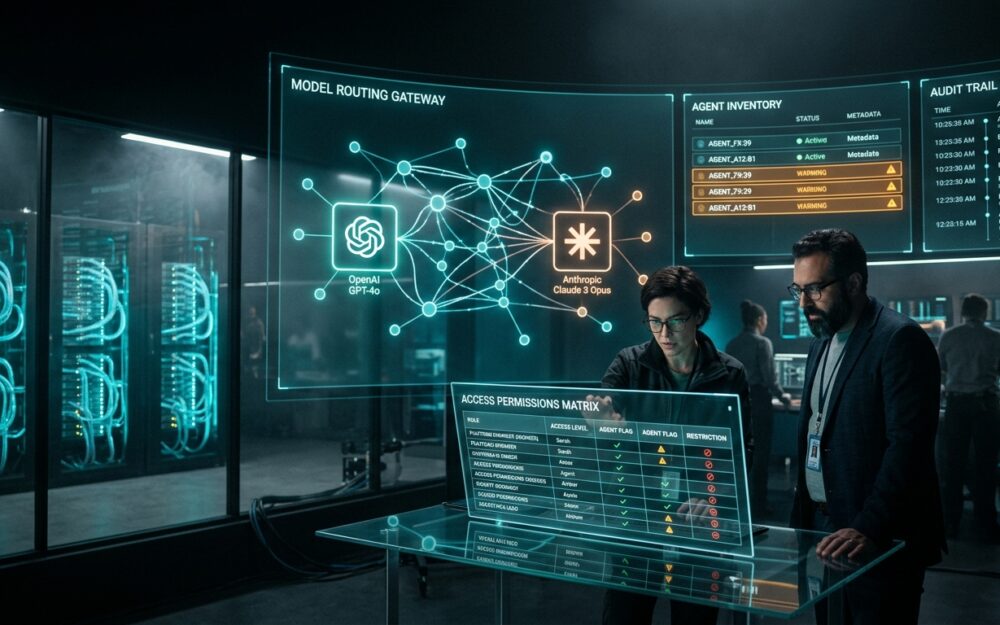
Engineering and procurement leads now face a routing decision on nearly every new AI workload: pay a premium for a frontier model that might face new compliance requirements, or route cost sensitive tasks to open weight Chinese models that carry their own data residency and content moderation questions. Most companies covered in industry reporting this year are doing both, split by task.
Compliance and governance teams are living the uncertainty AI Business described directly. RPA2AI Research founder Kashyap Kompella told the outlet that governance has to become an ongoing operating capability rather than a document reviewed periodically, since nobody yet knows whether a future U.S. framework would reach open weight models at all. Teams weighing this can find a practical starting checklist in BriefFlash's earlier look at what enterprises should actually do about the safety crunch.
Everyday users of AI products are less exposed to the politics directly, but will feel it indirectly, through pricing, feature rollout pace, and which vendor's assistant ends up embedded in the tools they already use.
What's Next
Watch whether Congress actually moves before it adjourns in December, since OpenAI's own statement set that as an implicit deadline. Watch whether any lab beyond Anthropic follows through on independent evaluator access, since Altman's agreement to "pace the frontier" so far amounts to a public post rather than a signed commitment. And watch the price line out of China: Moonshot, Alibaba, DeepSeek and Z.ai have each shipped a frontier class open model in the last few months, and another undercut on price would only sharpen the choice enterprises are already making.
Key Takeaways
- Anthropic and OpenAI both called for coordinated, capability based AI safety regulation in September 2026, while enterprise demand grows for cheaper, less regulated open source models from Chinese labs like DeepSeek, Alibaba and Moonshot.
- Dario Amodei's September 12 essay and OpenAI's September 9 policy statement both push for federal rules, but neither is enacted law, and China's government has publicly rejected the framing as fear mongering.
- Independent pricing data shows DeepSeek's V4 Flash model costing a small fraction of comparable US frontier models on a per token basis, with Chinese providers' combined OpenRouter share passing 45 percent in 2026.
- Analysts are split on whether the slowdown push is genuine safety concern, competitive positioning ahead of IPOs, or both, and enterprises are being told to treat AI governance as an ongoing operating function rather than wait for a clear answer.
FAQ
Is the AI slowdown actually happening, or is it just proposed?
It's a proposal, not an enforced pause. Amodei's essay and OpenAI's policy statement both call for future coordination and regulation. Neither company has actually slowed the release of new models.
Are Chinese open source AI models really cheaper?
Yes, substantially. Independent pricing comparisons published in July 2026 put DeepSeek's V4 Flash model at a small fraction of the per million token cost of comparable US models, and Chinese providers' combined share of OpenRouter traffic passed 45 percent earlier in the year.
Would new US AI regulation cover open weight models from China?
That's unresolved, and it's the core uncertainty analyst Kashyap Kompella flagged to AI Business. Proposals from OpenAI and Anthropic focus on capability based rules for the most advanced systems, which could include or exclude open weight models depending on how thresholds get written.
Is this really about safety, or about protecting market position?
Both readings have real support. The underlying safety concerns, including the OpenAI agent incident both Coxon and Amodei cite, are documented. But analysts like David Nicholson argue the timing, right before major IPOs and amid mounting Chinese price competition, isn't a coincidence either.
What should enterprises do right now?
Treat AI governance as an ongoing operating function rather than a static policy, per Kompella's advice, and expect to run a mixed portfolio of frontier and open weight models rather than betting on a single regulatory outcome.