
Google announced its September Android Drop on September 1, 2026, a package of five features covering motion sickness relief, low vision navigation, item tracking, and Google Messages personalization. The company detailed the rollout in a blog post from Erik Kay, VP of engineering for Android’s core platform, and Android and mobile outlets picked it up the same day. Two of the five features, Guided Vision and a new Find Hub memory tool, run through Gemini rather than static on device logic, while the other three are more conventional interface additions.
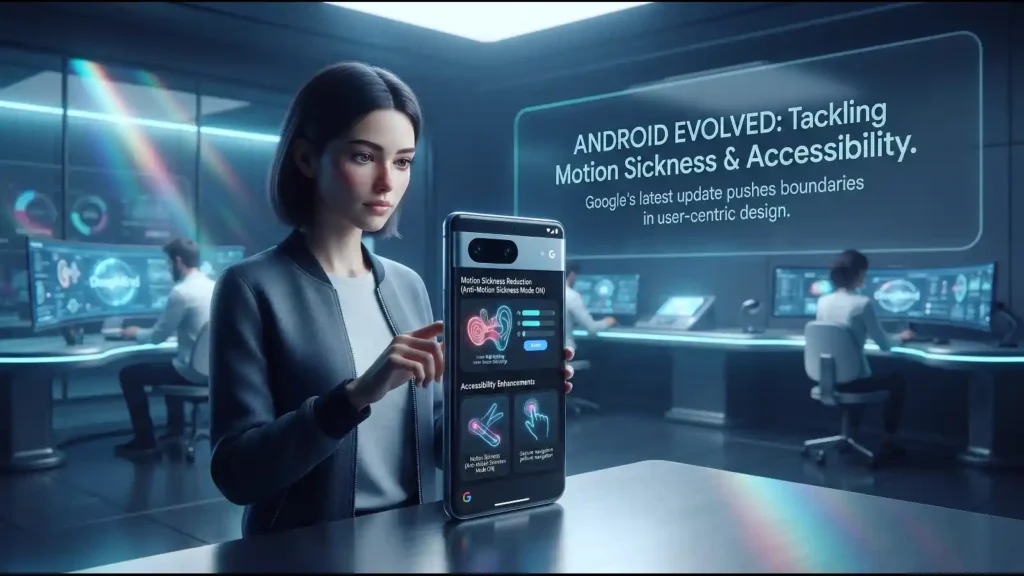
The most notable addition is Motion Assist, a screen overlay that moves in sync with a moving vehicle to reduce the mismatch between what a passenger sees and what their body feels. TechCrunch’s Lauren Forristal noted that the concept isn’t new: Apple shipped a similar feature called Vehicle Motion Cues in iOS 18 back in 2024. Google‘s own materials don’t address that comparison directly, but the timing and mechanics line up closely enough that it’s worth naming outright rather than treating Motion Assist as an original idea.
What’s confirmed comes straight from Google’s post and matches what TechCrunch, Android Central, and How-To Geek reported independently. What’s still open is how quickly each feature reaches the phones Google says are eligible, since rollout language in the announcement itself is inconsistent from feature to feature.
Quick Take
- Google’s September Android Drop, announced September 1, 2026, adds five features: Motion Assist, Guided Vision, Find Hub remembered items, Google Keep in Messages, and Google Messages chat themes.
- The update affects Android users broadly, but eligibility varies by feature: Motion Assist needs Android 17, Guided Vision needs Android 9 or newer with Gemini support, and Find Hub memory needs Android 16 or newer.
- Two of the five features, Motion Assist and Messages chat backgrounds, mirror capabilities Apple already shipped, which matters for anyone tracking how closely the two platforms are converging on accessibility and personalization.
What Google Actually Shipped
According to Google’s blog post, Motion Assist adds a customizable bubble overlay, adjustable for shape, color, and opacity, that can be set to trigger automatically or added to Quick Settings. Google says it’s available now on phones running Android 17.
Guided Vision shares a phone’s camera with Gemini Live to describe surroundings out loud, and Google gives specific examples: reading a food label, ordering from a menu in a dim restaurant, or locating an object on a shelf. It’s designed with input from the blind and low vision community and is rolling out to Android 9 and newer devices in countries where Gemini is supported. Google attached a footnote to this feature specifically: Guided Vision "can make mistakes" and is "not intended as a medical device, mobility aid, or substitute for safe-travel guides."
The third Gemini linked feature lets users ask Gemini to remember where they’ve stored an item, such as a passport or spare key, with the location saved to a new remembered items section in Find Hub. Google says this needs Android 16 or newer. Rounding out the five, Google Keep is now embedded directly in Google Messages for shared lists and notes, and Messages chats can be customized with backgrounds and matching color themes, both live starting today according to Google.
Catching Up in Some Places, Not in Others
TechCrunch was explicit that Motion Assist echoes Apple’s Vehicle Motion Cues, introduced in iOS 18 in 2024, and that Messages chat backgrounds follow a similar feature Apple added last year. That framing holds up. Guided Vision and the Find Hub memory tool are a different story: both depend on Gemini doing active reasoning over a live camera feed or a spoken instruction, not just rendering a static overlay or a photo background, and neither TechCrunch nor the other outlets we checked pointed to a directly equivalent shipped Apple feature.
Why It Matters
This is the second month in a row Google has used the monthly "Android Drop" format to push accessibility and personalization features outside of a numbered Android version bump, distributing changes through Play services and app updates instead of waiting for an annual OS release. That matters more than the individual features do, because it means eligibility now depends on Gemini regional availability and Play services version rather than a single carrier approved OS update, which has historically been Android’s biggest fragmentation problem.
The footnote on Guided Vision is worth taking seriously rather than skimming past. Google is shipping an AI powered accessibility tool for a community that depends on this kind of feature working reliably, and building in a disclaimer that it can make mistakes and isn’t a substitute for safe travel guidance is Google managing its own liability as much as setting user expectations. Anyone testing this with real accessibility needs should treat it as a supplement, not a replacement, for existing tools.
What to Watch
Watch whether Guided Vision’s real world accuracy in variable lighting matches Google’s curated examples, since that gap is where most AI vision tools disappoint once outside a demo. Also watch actual device level rollout speed: Google’s own post uses "coming soon" for Guided Vision and Find Hub memory but "available now" for Motion Assist and the two Messages features, so expect uneven timing across the September Android Drop’s five items.
Google has made a habit lately of tightening platform rules alongside feature rollouts, as seen in [Google’s recent Android app memory limits](https://www.briefflash.com/android-app-memory-limits/) taking effect for developers in 2027. That’s a separate story from this Drop, but it’s the same pattern of Google managing Android incrementally through policy and Play services rather than big annual releases.
Key Takeaways
- Google announced its September Android Drop on September 1, 2026, adding five features across accessibility, item tracking, and Google Messages.
- Motion Assist requires Android 17; Guided Vision needs Android 9 or newer with Gemini support; Find Hub remembered items needs Android 16 or newer.
- Motion Assist and Messages chat backgrounds mirror features Apple already shipped, per TechCrunch's reporting on Apple's 2024 Vehicle Motion Cues and last year's Messages background update.
- Google's own footnote warns that Guided Vision can be inaccurate and is not a substitute for a mobility aid or safe travel guide.
FAQ
What is the latest Android update from Google?
The most recent Android news is the September Android Drop, announced by Google on September 1, 2026. It adds five features: Motion Assist for motion sickness, Guided Vision for blind and low vision users, a Find Hub tool for remembering item locations, Google Keep integration in Google Messages, and customizable Messages chat themes.
What will happen to Android in September 2026?
As of this writing, the confirmed September 2026 Android news is the September Android Drop covered here. Google shipped these five features through Play services and app updates rather than a numbered OS release, so there is no confirmed new Android version tied to this specific announcement.
Is there a problem with the latest Android update?
No widespread bug reports tied to the September Android Drop have surfaced in Google's announcement or in the outlets we checked as of publication. The one caveat Google issued itself applies to Guided Vision, which the company says can be inaccurate and isn't intended as a medical device, mobility aid, or substitute for safe travel guidance.
What was the latest Android update today?
That depends on when you're reading this. As of this article's publication on September 2, 2026, the most recent confirmed Android news is the September Android Drop that Google announced the day before, on September 1, 2026.