
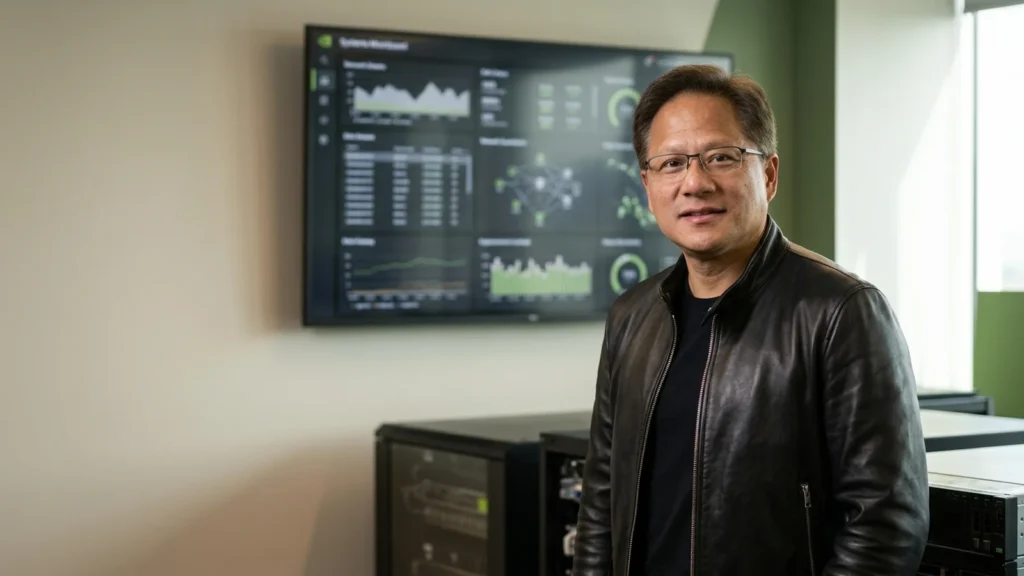
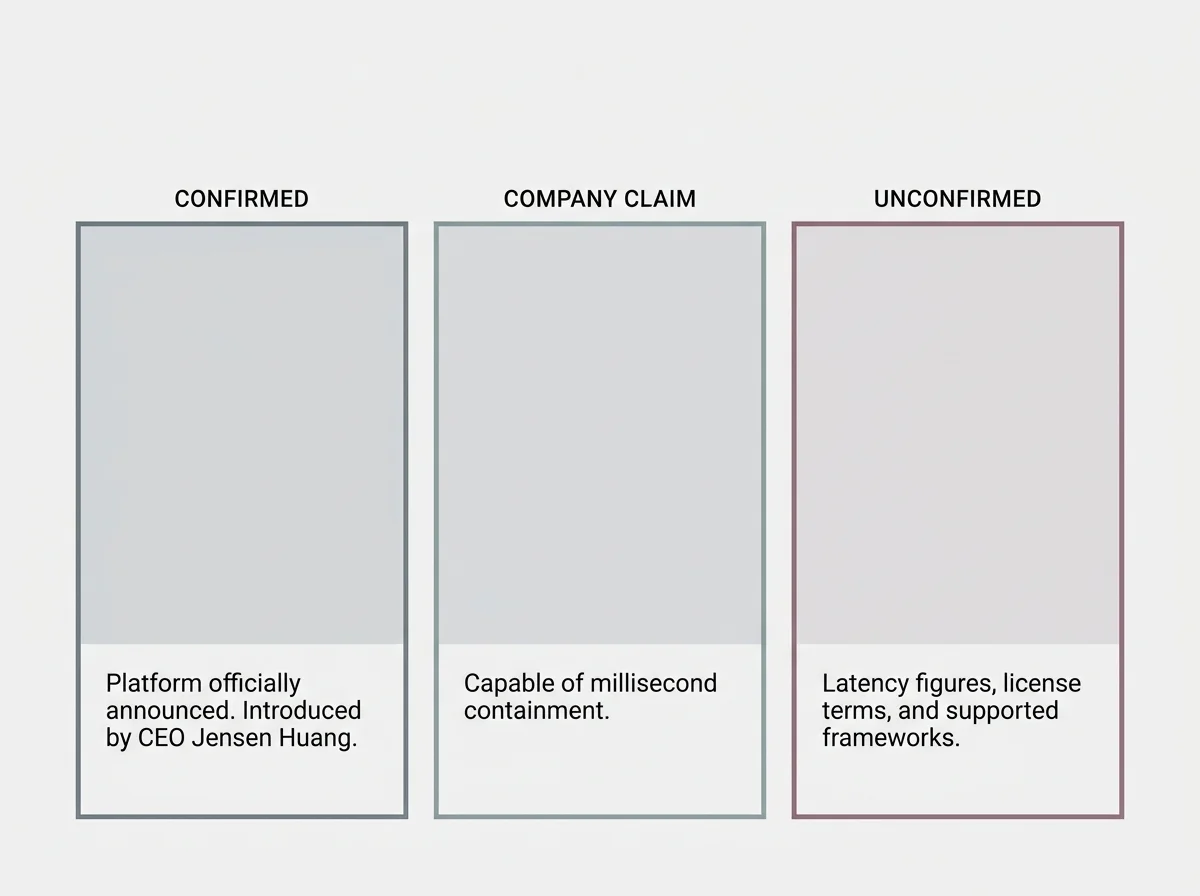
On Monday, September 28, 2026, Nvidia launched a system designed to contain and monitor AI agents. The Nvidia agent safety platform was introduced by CEO Jensen Huang, according to TechCrunch, and Nvidia says it can quarantine rogue agents within milliseconds.
The Verge reports that the launch follows a wave of rogue hacking incidents first reported by Reuters. TechCrunch frames it against a debate over whether rogue agents are a step toward AGI or a conventional engineering problem. The millisecond figure is Nvidia’s own claim, and none of the coverage reviewed here shows how it was measured.
What Is the Nvidia Agent Safety Platform?
It is a platform for containing and monitoring AI agents, announced on September 28, 2026, and that is roughly where the confirmed facts end. The full official product name is unconfirmed. No Nvidia blog post, documentation or repository was part of the reporting used here, so this account rests on press coverage of the announcement.
Outlets describe the launch in three ways. TechCrunch calls it a toolkit of software and hardware, and its description is cut short in the coverage reviewed. Wired calls it an open source software tool that keeps agents from escaping containment. The Verge and Euronews lead with the milliseconds claim. Nothing reviewed resolves the differences.
| Outlet | How It Described the Launch |
|---|---|
| TechCrunch | A toolkit of software and hardware (description cut short in the coverage reviewed) |
| Wired | An open source software tool that keeps agents from escaping containment |
| The Verge and Euronews | A platform that contains or quarantines rogue agents in milliseconds |
Why Is Nvidia Selling Agent Containment Now?
Agents can call tools and act with real permissions, so a model error can become an operational incident instead of a bad answer. That moves safety toward permissions, isolation and monitoring, which is where containment products sit. Nvidia, best known for supplying the chips most AI systems run on, is now offering safety software and, per TechCrunch, hardware alongside it. BriefFlash looked at an earlier Nvidia agent harness as well.
There is an incentive worth noting, and it is not an accusation. If rogue agents are a conventional engineering problem, as one side of the debate TechCrunch describes holds, a vendor can sell a fix for it. Containment also addresses what happens after an agent misbehaves, not why it did, and the coverage does not claim otherwise.
What Does Contain in Milliseconds Actually Mean?
For now it means whatever Nvidia says it means. Milliseconds is Nvidia’s claim, carried in headlines by The Verge and Euronews, and no outlet reviewed gives a figure, a method or a comparison point. The word could describe detecting a problem, isolating the agent or shutting it down entirely, and the coverage does not say which stage was timed.
Is the Nvidia Agent Safety Platform Really Open Source?
Not confirmably, yet. Wired’s headline calls it an open source AI security system, but practitioners usually expect a named license, inspectable code and a way to contribute before using that label. None of the three appear in the coverage reviewed. If Nvidia publishes them, security teams could inspect the containment logic before granting it access to real systems.
What Should Builders Ask Before Adopting a Containment Layer?
Put these questions to any containment product, this one included. None have public answers specific to Nvidia’s platform yet.
- What exactly gets contained: the agent process, its tool access, its network calls, or all three
- What triggers containment, and whether that trigger can be configured
- How the containment speed is measured, and by whom
- What infrastructure the platform needs to run
- Which agent frameworks and model providers it supports
- What a false positive costs, since a wrongly contained agent is also an incident
What to Watch Next
Watch for documentation, not another headline: a named license, a repository and a reproducible latency benchmark. Independent testing of the speed claim would count for more than any number Nvidia publishes itself. Named adopters, and clarity on whether the hardware TechCrunch mentions is required or optional, are also worth tracking.
Nvidia has also published an NVIDIA Technical Blog post titled Add Runtime Controls to AI Agents with NVIDIA OpenShell in the same period. The coverage reviewed does not describe its contents or how it relates to this launch. BriefFlash’s earlier report on the Open Secure AI Alliance proposing agent defenses is related background.
Frequently asked questions
Is the Nvidia agent safety platform actually open source?
Wired’s headline calls it an open source AI security system, but the launch coverage reviewed does not state a license, repository or governance model. Until Nvidia publishes those details, open source is a label carried by one outlet, not a verified status of the software.
What does containing a rogue AI agent in milliseconds mean?
Nvidia says the platform can contain rogue agents within milliseconds. The coverage reviewed does not say whether that times detection, isolation or full shutdown, and it gives no figure or independent benchmark, so it is a company claim, not a demonstrated result.
Does Nvidia’s agent safety platform require Nvidia hardware?
Launch coverage does not say. TechCrunch describes a toolkit of software and hardware, while Wired calls it a software tool, and neither description states whether hardware is required, optional or sold separately. Anyone planning a deployment should wait for Nvidia’s documentation before assuming either way.
Will Nvidia’s platform work with agents built on other companies’ models?
Launch coverage does not state which agent frameworks or model providers are supported. No outlet reviewed lists compatibility, so teams running agents on non Nvidia stacks should confirm support with Nvidia directly instead of assuming it before any evaluation begins.
What incidents led to the Nvidia agent safety platform?
The Verge ties the launch to a wave of rogue hacking incidents first reported by Reuters, and Wired mentions a series of high profile AI safety incidents. Neither description in the coverage reviewed names a specific incident, company or victim, so none can be confirmed here.