
Just after Rippling blew millions of dollars on artificial intelligence tools within a span of mere months, the workforce management company recognized an urgent operational blind spot. The realization that internal AI usage had scaled far faster than financial oversight mechanisms prompted the company to pivot its internal crisis into a commercial product. This week, Rippling formally unveiled AI Spend Console, a new platform feature designed to track individual and team employee AI spending.
The launch addresses a growing friction point in modern enterprise IT: while generative AI tools promise massive productivity gains, they operate on variable, usage-based pricing models that can spiral out of control without granular oversight. According to a report by TechCrunch, Rippling's own AI expenditures surged rapidly as employees adopted various large language models and AI agents for daily tasks, creating an unpredictable budgetary burden. (See also: Jeff Dean and Other Top AI Researchers Depart Google to Launch Scientific Discovery Startup)
By developing the AI Spend Console, Rippling is attempting to solve its own internal inefficiencies while commercializing the solution for broader enterprise use. The product aims to bridge the gap between decentralized software procurement and centralized financial control, offering IT administrators a way to measure the actual return on investment for the AI tools their workforce demands.
After Rippling blew millions on AI in months, it built an employee ROI tool
Sub-headline: The workforce management firm transforms an internal budgetary crisis into a new enterprise product for tracking granular AI spending.
Key Takeaways
- After Rippling blew millions on AI in just a few months, the company developed AI Spend Console to track employee AI usage and spending.
- AI Spend Console provides IT and finance teams with granular insights into individual and departmental AI tool consumption.
- The product launch highlights a critical enterprise challenge: managing variable, usage-based AI costs while attempting to measure actual productivity ROI.
The Catalyst: An Internal AI Budget Crisis
The genesis of Rippling’s new product stems from a surprisingly common enterprise scenario. As generative AI tools proliferated throughout 2024 and 2025, employees rapidly integrated large language models (LLMs) and autonomous agents into their daily workflows. The decentralized adoption of these tools created a fragmented, usage-based billing environment that traditional procurement systems were not equipped to handle.
According to Julie Bort at TechCrunch, Rippling experienced this friction firsthand. The company's internal AI costs surged into the millions over a period of just months. This wake-up call demonstrated that without strict oversight, the operational costs of enterprise AI can easily eclipse the productivity benefits.
Introducing AI Spend Console
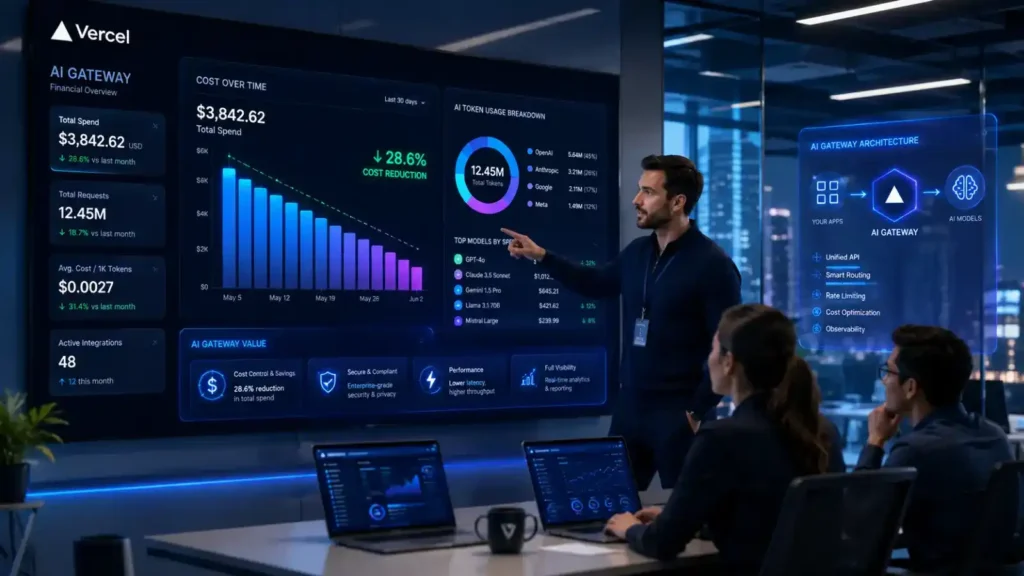
To address this operational gap, Rippling launched AI Spend Console. The platform is engineered to provide deep visibility into how, where, and by whom AI resources are being consumed across an organization.
Core Features and Specifications
The AI Spend Console integrates directly into Rippling’s existing workforce management ecosystem, offering several distinct capabilities tailored for IT and finance administrators:
- Granular Spend Tracking: Monitors API calls, token usage, and subscription costs across various AI providers (e.g., OpenAI, Anthropic, Google Gemini) on a per-employee basis.
- Departmental Roll-ups: Aggregates individual usage data into team and department-level summaries to help managers understand which groups are driving the highest AI costs.
- Budget Enforcement: Allows administrators to set hard limits or soft alerts on AI spending, preventing runaway costs before they impact the bottom line.
- ROI Correlation: Attempts to link AI tool usage with productivity metrics, giving enterprises a framework to evaluate whether the financial investment in AI is generating tangible workflow efficiencies.
Read the official announcement coverage to see how the company positions the tool against traditional software spend management.
Enterprise AI Management Comparison
To understand where AI Spend Console fits into the broader market, it is helpful to contrast it with traditional software asset management (SAM) tools.
Industry Impact and Enterprise Implications
The launch of AI Spend Console occurs at a critical inflection point for enterprise technology. In the wake of the incident after Rippling blew its internal AI budget, the broader industry has been forced to reevaluate how AI deployments are governed.
For Chief Information Officers (CIOs) and IT administrators, the product signals a shift away from blanket AI subscriptions toward hyper-granular, metered oversight. Enterprises can no longer afford to treat AI tools as standard SaaS applications; the variable cost structures of token-based usage require financial controls that map directly to individual employees. (See also: Cloudflare Launches Kitesurf: A Cloud-Hosted Browser Built Specifically for AI Agents)
Furthermore, the introduction of ROI tracking mechanisms addresses the growing scrutiny from corporate boards demanding proof of AI-driven productivity. By correlating AI expenditure with measurable business outcomes, platforms like AI Spend Console may ultimately determine which AI models survive in the enterprise market and which are abandoned due to poor cost-to-value ratios.
As organizations continue to navigate the complexities of AI integration, tools that provide strict financial oversight will become foundational infrastructure. Discover how internal AI cost overruns are reshaping enterprise software and driving the next wave of workforce management technology. To understand broader trends in AI adoption, explore our comprehensive guide to enterprise AI strategy. For more insights into financial oversight tools, check out our analysis of software spend management platforms.
Key Takeaways
- After Rippling blew millions on AI in just a few months, the company developed AI Spend Console to track employee AI usage and spending.
- AI Spend Console provides IT and finance teams with granular insights into individual and departmental AI tool consumption.
- The product launch highlights a critical enterprise challenge: managing variable, usage-based AI costs while attempting to measure actual productivity ROI.
FAQ
What is Rippling's AI Spend Console?
AI Spend Console is a new workforce management product built by Rippling that tracks individual and team-level employee AI spending, helping enterprises monitor API usage, token consumption, and overall AI tool ROI.
Why did Rippling build the AI Spend Console?
Rippling built the tool after the company internally blew millions of dollars on AI usage within a few months. The massive internal spend highlighted a broader industry need for granular oversight and budget enforcement for variable, usage-based AI tools.
How does AI Spend Console measure ROI?
The platform correlates granular AI tool usage and spending data with productivity metrics, giving IT administrators and finance teams a framework to evaluate whether their AI investments are generating tangible workflow efficiencies.