

The Meta enterprise AI platform launched on Monday, September 28, 2026, and Meta hired MongoDB’s CEO to lead it, according to TechCrunch. A Reuters report on the executive move, surfaced through a Hacker News item that had passed 200 points, describes the CEO stepping down from MongoDB to lead Meta’s enterprise platform. The story was 3.7 hours old when it reached the BriefFlash desk.
The stakes are concrete for anyone choosing an AI vendor. Meta is putting named products in front of businesses and developers and has put the chief executive of a database company in charge, which reads as a business line rather than a demo. What the reporting does not contain is pricing, dates, customers or terms, and that gap is the second half of this story.
What is the Meta enterprise AI platform?
Meta says it will focus on bringing its full technology stack to businesses and developers. According to TechCrunch, Meta lists Muse, Meta Business Agent, Muse API and Muse Code as part of that stack, plus more products it has not named. That is the full extent of the product detail available.
The names are the only confirmed facts, and a list of names is not proof of a working, priced and supported offering. The phrase full technology stack is Meta’s own framing, and nobody outside the company has verified it. BriefFlash is not describing what any of these products do or cost, because the reporting does not say.
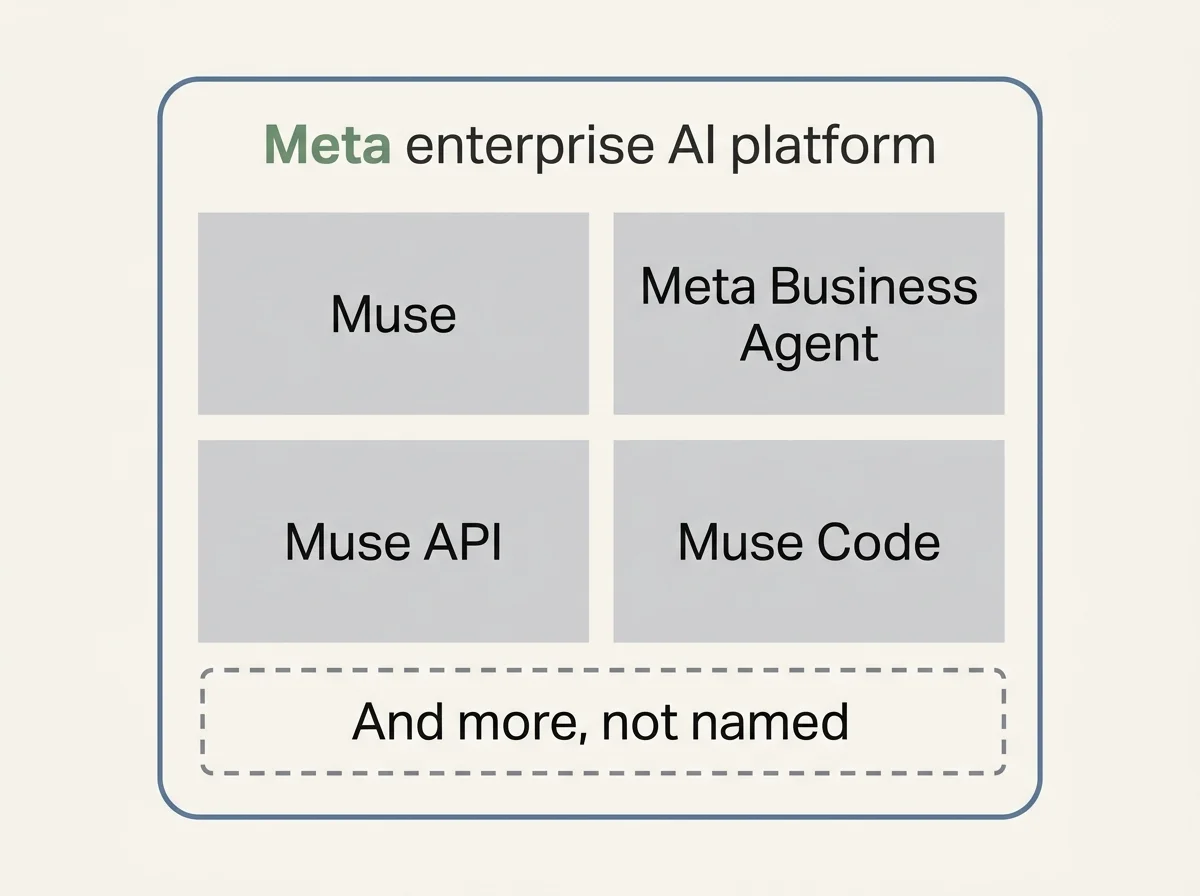
By name, Meta Business Agent is the product closest to the agent category, where business attention has been concentrating. That is my read from the name alone, and Meta has not said where it expects the platform to land.
Who is leading it, and why does a database CEO matter?
Meta hired MongoDB’s CEO to lead the initiative, per TechCrunch, and Reuters describes the CEO stepping down to take the role. BriefFlash is not naming the executive because the material available to the desk gives no full name. The move is known at headline level: no start date, title or reporting line has been published.
MongoDB is a database company, and that is all this article will say about it. Meta has not explained the choice. My read, which is analysis and not a Meta statement, is that databases sit underneath most business software, so a hire from that world suggests Meta wants credibility with the teams that buy and integrate enterprise systems. A high profile hire signals seriousness of intent. It says nothing about product quality.
Two companies now face a leadership question on the same day. Meta has to show the platform has a real operating structure, and MongoDB has to say what happens next. Nothing in the reporting addresses the second point.
Do the consumer questions around Muse carry over to enterprise buyers?
That is open. BriefFlash’s coverage of Meta’s debut of Muse and the trust it asked for framed the launch as Meta requesting more trust than it had needed before. A later piece tied Muse’s growth and the design scrutiny around it together, again in a consumer setting.
Consumer products are judged on growth and engagement. Enterprise buyers sign contracts, and they need support commitments, data handling terms, uptime and a roadmap they can plan around. That comparison is my analysis, but it explains why consumer trust questions do not simply vanish in a business setting.
Developers face a separate question. BriefFlash covered Meta’s shift to open weights with Muse Glimmer, and nothing in the current reporting says how open weights models relate to the enterprise platform, whether for licensing, hosting or support.
What has Meta not said yet?
Almost everything a buyer would need. The table separates what the reporting establishes from what remains undisclosed as of September 28, 2026.
| Topic | Status |
|---|---|
| Platform launch | Reported by TechCrunch |
| Named products | Muse, Meta Business Agent, Muse API, Muse Code and more, per Meta as reported by TechCrunch |
| Executive hire | Reported by TechCrunch; Reuters describes the CEO stepping down to lead Meta’s enterprise platform |
| Pricing, availability, customers | Not disclosed |
| Contract and model terms | Not disclosed |
| Open weights link | Not stated |
| Start date, reporting line, MongoDB succession | Not disclosed |
No primary source from Meta or MongoDB was available to the desk, so this account rests on TechCrunch and Reuters reporting. The three listings that carried the story are the same story in different feeds, not three independent confirmations of every detail. Hacker News points measure attention, not accuracy.
What should readers watch next?
Watch for a Meta announcement page with terms and pricing, named customers, and any statement from MongoDB about leadership. Those three would turn a list of names and a headline into something a buyer can evaluate. Until they appear, treat the platform as a stated intention, and the hire as the strongest evidence so far that Meta means it.
Frequently asked questions
Who is leading Meta’s new enterprise AI initiative?
According to TechCrunch, Meta hired MongoDB’s CEO to lead the new enterprise AI initiative. A Reuters report describes the CEO stepping down from MongoDB to lead Meta’s enterprise platform. The reporting available on September 28, 2026 gives no start date, title or reporting line, and no statement from either company was available.
What does Meta’s enterprise AI platform include?
Meta says it will bring its full technology stack to businesses and developers, including Muse, Meta Business Agent, Muse API and Muse Code, plus more products it has not named. The reporting available on September 28, 2026 does not describe what each product does.
How much does Meta’s enterprise AI platform cost and when is it available?
Neither is known. The TechCrunch and Reuters reporting available on September 28, 2026 carries no pricing, availability dates, customer names or contract terms. Buyers should wait for a Meta announcement page or sales documentation before assuming anything about cost, rollout timing or support commitments.
What happens at MongoDB now that its CEO is joining Meta?
The reporting does not say. A Reuters report describes MongoDB’s CEO stepping down to join Meta, but nothing available covers a successor, an interim leader or the terms of the departure. A statement from MongoDB would be the first confirmed detail on leadership.