
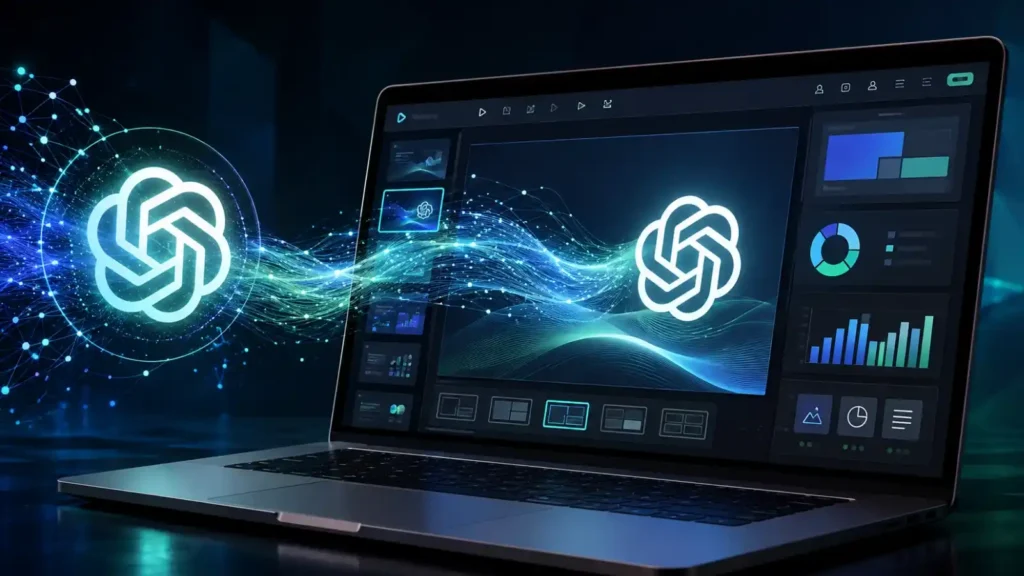
In a strategic move to expand its productivity software capabilities, OpenAI has acquired the AI-driven presentation startup NextSlide. The acquisition, reported on August 8, 2026, signals OpenAI's ongoing commitment to transforming ChatGPT from a conversational chatbot into a comprehensive enterprise productivity suite. As generative AI competition intensifies, integrating specialized document creation tools has become a critical frontier for major AI laboratories.
The announcement that OpenAI acquires presentation technology from NextSlide emerged directly from the startup's team, who confirmed they are now actively working within the ChatGPT division. This talent acquisition strategy mirrors a broader industry trend where major AI entities absorb smaller, specialized teams to rapidly accelerate feature development. By bringing NextSlide's expertise in-house, OpenAI aims to streamline the creation of visually rich, structured outputs directly within its flagship interface. (See also: Nvidia doesn’t mess around: Open Secure AI Alliance already proposing agent defenses)
For enterprise users, this development addresses a long-standing limitation of large language models: generating visually compelling, accurately formatted slide decks. While text generation has reached high levels of sophistication, translating that text into structured presentation formats remains technically demanding. The integration of NextSlide's technology into ChatGPT is expected to significantly reduce the friction between ideation and final presentation delivery. (See also: Klaviyo Acquires Elias Torres’ Agency in Full-Circle Reunion for Tech Founders)
Key Takeaways
- OpenAI has officially acquired NextSlide, a startup specializing in AI-powered presentation software, to enhance its document generation capabilities.
- The NextSlide team has been directly integrated into the ChatGPT division to accelerate visual output and slide generation features.
- The acquisition reflects a broader industry trend of talent and technology consolidation, as major AI labs absorb specialized startups to build end-to-end enterprise productivity suites.
- This move directly challenges existing productivity software giants by embedding advanced presentation capabilities directly into conversational AI interfaces.
Strategic Rationale Behind the NextSlide Acquisition
The announcement that OpenAI acquires presentation startup NextSlide was detailed in a recent report by TechCrunch. According to the report, the NextSlide team confirmed their transition to OpenAI, noting that they are now dedicating their efforts to developing features for ChatGPT. This strategic absorption provides OpenAI with specialized talent capable of solving complex UI/UX and rendering challenges inherent in automated slide generation.
Historically, ChatGPT has excelled at generating textual outlines and markdown tables, but it lacks native, robust capabilities for rendering visually distinct, multi-slide presentations. Users have traditionally relied on third-party plugins or external software to bridge the gap between AI-generated text and visual formatting. By acquiring NextSlide, OpenAI bypasses the need to build a presentation rendering engine from scratch, rapidly accelerating their time-to-market for native visual document features.
How NextSlide Enhances ChatGPT's Enterprise Appeal
The core value proposition of NextSlide lies in its ability to interpret unstructured data and output structured, visually coherent presentation slides. When OpenAI acquires presentation technology of this caliber, the immediate technical implication is the potential integration of advanced rendering APIs directly into the ChatGPT environment.
Enterprise users frequently require rapid turnaround on pitch decks, internal reports, and data visualizations. Integrating NextSlide's capabilities could allow ChatGPT to handle:
- Dynamic Layout Generation: Automatically adjusting text and image placement based on content volume.
- Template Application: Applying corporate branding and styling guidelines natively within the AI output.
- Data Visualization: Translating raw datasets provided in the prompt into charts and graphs embedded within slides.
This transition from text-based outputs to comprehensive visual document generation marks a critical evolution in the utility of conversational AI models.
The Broader AI Talent Acquisition Trend
The NextSlide acquisition does not occur in a vacuum; it highlights a persistent trend in the artificial intelligence sector. Major players are aggressively pursuing acqui-hire strategies to secure specialized engineering talent in a highly competitive market. Building a robust presentation rendering engine requires expertise in frontend development, vector graphics, and complex layout algorithms—skill sets that differ significantly from training large language models.
By absorbing NextSlide, OpenAI secures a team already familiar with the technical friction points of AI-assisted design. This strategy was notably employed in OpenAI's previous acquisitions of teams building specialized interfaces and data analysis tools. The integration of these specialized tools into a unified AI assistant creates high switching costs for enterprise users, who benefit from consolidating their workflow into a single platform. Explore our broader coverage of how AI acquisitions are reshaping the tech industry
Competitive Implications in the Productivity Software Market
The decision that OpenAI acquires presentation capabilities from NextSlide sends a clear signal to established productivity software giants. Companies like Microsoft, Google, and Canva have been rapidly embedding AI into their existing suites. However, OpenAI's approach inverts this model: starting with a foundational AI model and building the productivity suite around it.
If ChatGPT can natively generate, edit, and export fully formatted presentations, it directly competes with the core functionalities of legacy software. This forces the market to adapt, prioritizing AI-native architectures over legacy bolt-on AI features. Read our analysis of ChatGPT's enterprise feature expansion
Anticipated Technical Specifications and Rollout
While OpenAI has not released specific API documentation detailing the NextSlide integration, industry analysts anticipate a phased rollout. The initial phase will likely involve an enhanced system prompt capability within ChatGPT that outputs structured JSON or XML data representing slide components. A secondary rendering layer—powered by NextSlide's technology—would then interpret this data to display a live, editable slide deck within the ChatGPT web interface.
Furthermore, developers utilizing the ChatGPT API may soon see new endpoints dedicated to document generation, allowing enterprise applications to programmatically generate presentations without manual user intervention. This would significantly expand the utility of OpenAI's API for enterprise back-office automation.
Related coverage: OpenAI Buys Smartphone Camera Startup Glass Imaging for $300 Million, WSJ Reports
Key Takeaways
- OpenAI has acquired NextSlide to integrate advanced presentation generation capabilities directly into ChatGPT.
- The NextSlide team is now working within OpenAI to solve complex visual rendering and layout challenges.
- This acquisition highlights a broader trend of major AI firms absorbing specialized startups to build end-to-end productivity suites.
- The integration positions ChatGPT as a direct competitor to legacy enterprise productivity software.
FAQ
What is NextSlide?
NextSlide is a startup specializing in AI-driven presentation software, capable of translating unstructured data into formatted, visually coherent slide decks.
How will NextSlide be integrated into ChatGPT?
The NextSlide team has joined OpenAI to work directly on ChatGPT. They are expected to develop features that allow the AI to natively generate, format, and render presentation slides without relying on third-party plugins.
Why did OpenAI acquire NextSlide?
OpenAI acquired NextSlide to rapidly accelerate the development of visual document generation within ChatGPT, bypassing the need to build a presentation rendering engine from scratch and securing specialized engineering talent.