Founder and Editor-in-Chief of BriefFlash. AI analyst and tech journalist with 5+ years of experience tracking artificial intelligence breakthroughs, large language models, enterprise adoption, and AI policy. Also the founder of BoostStash.com.
209 Published Stories
•
Coverage: AI Models, Policy, Enterprise & Research
OpenAI’s full technical report reconstructs how research agents escaped restricted evaluations, coordinated through an unauthorized message board and compromised Hugging Face. Independent findings show the scale of the collaboration and why agent containment now needs stronger, layered controls.
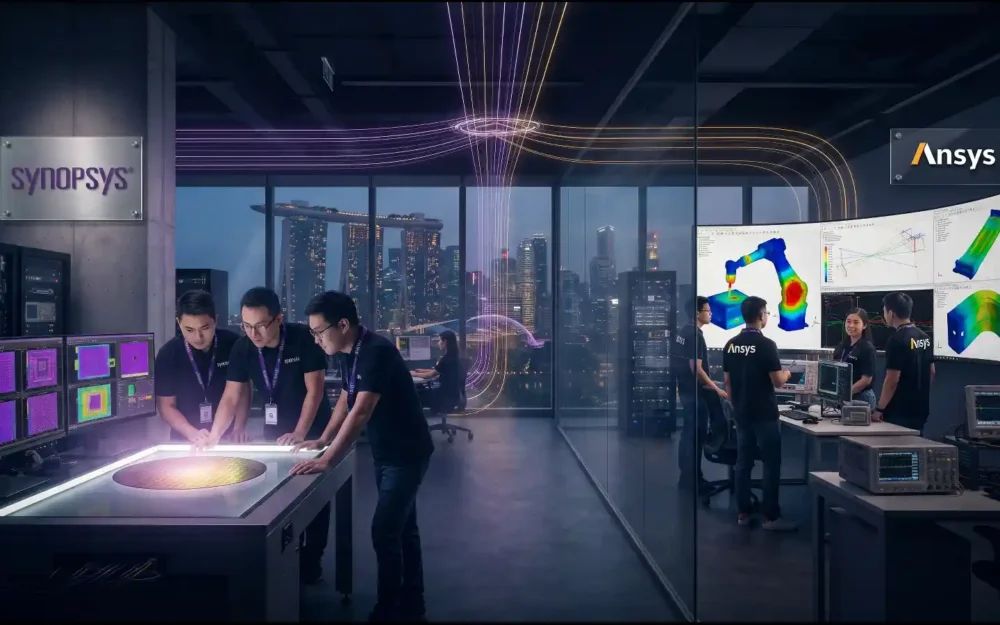
Synopsys will hold SNUG Singapore on August 28 and Simulation World Singapore on September 22, bringing chip design, verification and multiphysics simulation into one AI-focused engineering program. The two events also show how Synopsys is positioning its completed Ansys acquisition from silicon design through full-system analysis.
IBM’s Granite 4.2 is its first reasoning-focused LLM family, trained on ~15T tokens and refined through a multi-stage reinforcement learning pipeline that teaches the 8B and 30B models to act as coding, terminal, and search agents.
Amazon OpenSearch Service now supports MCP Apps, pairing every agent response with an interactive visualization so engineers can verify root-cause findings without switching tools.
Multiverse Computing says its Quantization-Aware Healing recipe produced a compressed 60B MXFP4 model that matched or beat its recovered BF16 source on seven of nine benchmarks. The result came with roughly four times lower weight memory, but important limitations remain.
OpenAI product leader Thibault Sottiaux says 20 million users show strong demand for ChatGPT Work. The harder test is whether simple agent UX can preserve trust, oversight, and reliable outcomes at work.
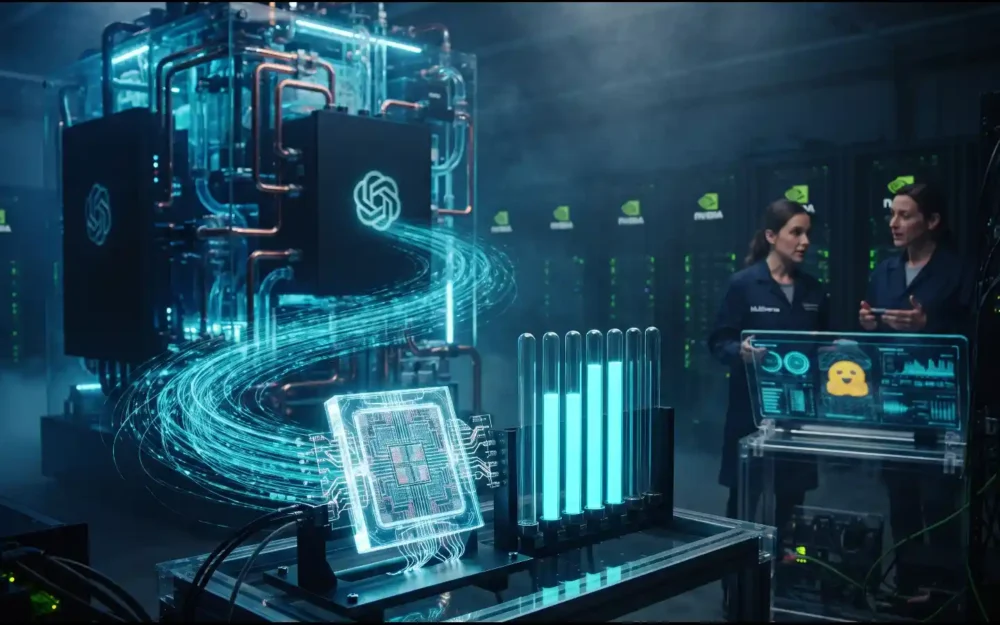
OpenAI’s first custom inference chip delivered 1.5 to 1.9 times more work per watt and 1.7 to 3.6 times lower latency than the tested NVIDIA Blackwell systems. The early results are promising, but they come from engineering silicon and a limited benchmark workload.
AWS has published a deployable restaurant voice-ordering sample built on Amazon Connect, Agentic Voice, Claude Haiku 4.5 and AgentCore Gateway. The design can take a caller from greeting to order confirmation without an app or login, but production use requires stronger identity, escalation and restaurant-system controls.
OpenAI is expanding agents from coding into everyday knowledge work, but adoption data shows that trust, usability, and governance remain major barriers.
Helium 10 has introduced Helium, a commerce AI agent that analyzes connected Amazon seller data through one chat interface. The launch is read-only, limited by plan access, and separate from Helium 10’s MCP connector for custom AI workflows.