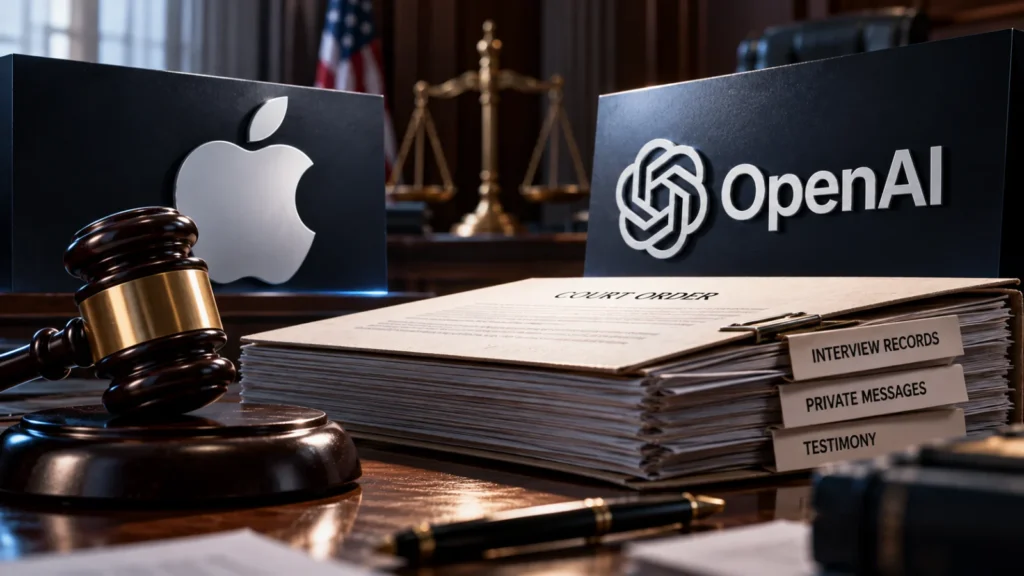
A federal judge ruled on October 13, 2026 that Apple can access OpenAI‘s interview materials involving former Apple employees, according to reports. The order sits inside the OpenAI Apple trade secrets case, and it also reportedly gives Apple private messages and testimony from key figures.
It is a discovery ruling, not a verdict. It opens OpenAI’s hiring process to inspection by the company suing it, but it does not say anyone took anything. We think that distinction matters more than the headline, because the ruling decides what evidence Apple can examine, not who is right.
What did the judge order in the OpenAI Apple trade secrets case?
The judge reportedly ruled that Apple may access OpenAI’s interview materials involving former Apple employees, along with private messages and testimony from key figures in the case. That is the full extent of what has been reported, and BriefFlash has not independently confirmed it.
Several details are missing. The reporting does not name the court or the judge, give a date range for the materials, say who the key figures are or describe how much material is involved. It also carries no comment from either company. We have left all of those blank rather than guess.
Apple is the party pressing trade secrets claims against OpenAI. For the history of the dispute, see our earlier coverage of the evidence Apple shared in its trade secrets case against OpenAI.
What is a discovery order, in plain terms?
A discovery order requires a party to hand over relevant material to the other side before trial. Discovery is the stage where each side learns what evidence exists, and a judge typically steps in when the parties disagree about what must be shared. The reporting does not describe the disagreement here.
Two limits apply. Access for Apple does not mean the materials become public, and an order of this kind is not a finding on the merits of Apple’s claims. Nothing reported says whether the ruling is final or can be appealed.
Why do hiring records matter in a trade secrets dispute?
Hiring records can show who a company approached, what it asked them and what information, if any, moved between employers. That is general reasoning about this type of case, not a finding about this one. Trade secrets claims often turn on how information travels, and recruiting is one route people tend to examine.
Interview materials are useful for that purpose because they capture conversations at the moment a candidate moves from one employer to another. Private messages and testimony add the participants’ own words. We hold this view with moderate confidence, and the materials could help either side, since records can also show that nothing improper was asked or shared.
What do we not know yet about the ruling?
Most of the practical questions are still open. The graphic below separates what has been reported from what has not been stated.
Until OpenAI or Apple responds, or a court document becomes available, the account rests on a single report. We will not characterise the strength of Apple’s claims, because nothing in the reporting speaks to it.
Who should watch how courts treat recruiting evidence?
Companies that recruit from rivals have the clearest reason to pay attention. If hiring files and messages are open to a competitor’s lawyers in a dispute, the way interviews are conducted and documented becomes part of the legal picture. That is an inference from the ruling as reported, not a claim that OpenAI did anything improper.
For founders and AI-industry watchers, the practical point is narrower. A dispute between two of the most closely watched companies in tech now involves inspection of hiring practices, which is a different kind of scrutiny from a public filing.
OpenAI is also the subject of an unrelated story today: our report on the arrest of an OpenAI engineer over an alleged recording device. Nothing reported connects the two.
What happens next in the case?
No timeline has been reported. The signals worth watching are a response or appeal from OpenAI, any public statement from Apple, and any filing that shows what the materials contain.
If the materials surface in later filings, they will tell readers far more than the ruling does. Until then, the safest reading is the narrow one: a judge has opened a set of records to Apple, and what they show is not yet known.
Frequently asked questions
What is a discovery ruling?
A discovery ruling is a judge’s decision about what evidence one side must share with the other before trial. It decides access to material, not who wins. In this case, a federal judge reportedly ruled that Apple can access OpenAI’s interview materials involving former Apple employees, plus private messages and testimony from key figures.
Does this ruling mean OpenAI is guilty?
No. A discovery ruling is a procedural decision and is not a finding that OpenAI took any trade secrets. It decides what evidence Apple can examine. Whether the materials support Apple’s claims is a separate question the reporting does not answer, and OpenAI’s response has not been reported.
What can Apple now see?
Apple can reportedly access OpenAI’s interview materials involving former Apple employees, along with private messages and testimony from key figures in the case. The reporting does not say who the key figures are, how much material is involved or what period it covers, so the full scope of the order is unknown.
Will the records become public?
Not necessarily. Access for Apple does not mean the materials become public, and the reporting does not say whether they will be filed in court or kept confidential. If the records later appear in court filings, their contents could become known, but nothing reported indicates that has happened.