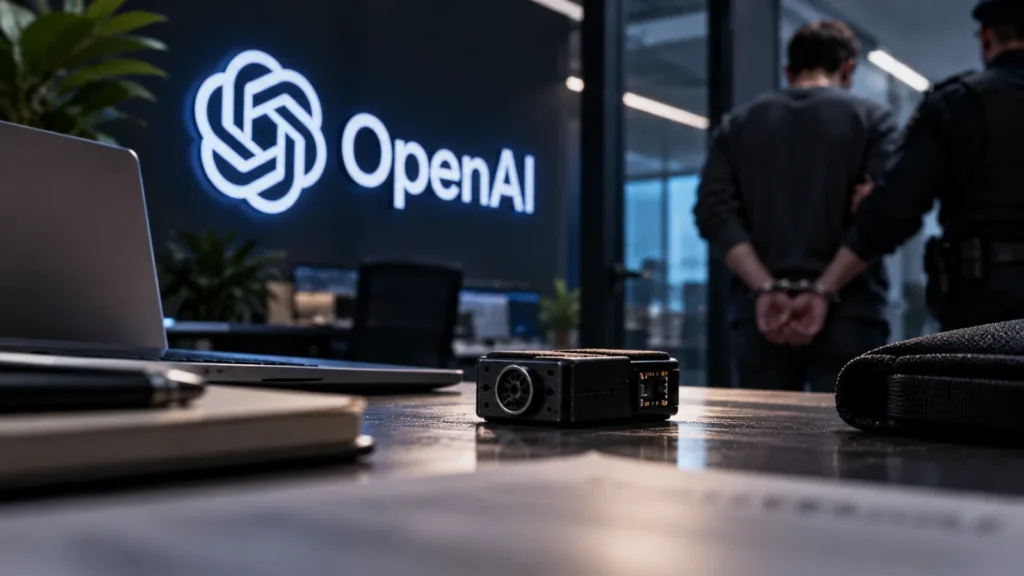
OpenAI says it found a sophisticated recording device hidden in one of its offices and identified a specific employee as responsible. Reports say the OpenAI employee arrested over recording device allegations is an engineer at the company.
The employee is named in a local report as 35-year-old Abdulrahman Alfozan, and he is reportedly charged with using or attempting to use a device to intercept oral communications. Everything here is an allegation. The case is unusual because a company at the center of the AI industry says it used its own models to help work out what the device was and where it came from, and that claim has not been checked by anyone outside the company.
What did OpenAI say it found?
OpenAI says it discovered a sophisticated recording device hidden in one of its offices. The company has published its own account of the incident, and the reporting available so far relays that account without a link to the original post.
The location is the first detail to treat carefully. The reporting refers to one of the company’s offices, without naming a city or a building. A headline on the story places the device in a conference room, but that detail rests on the headline alone, so we are not treating it as established.
The account also says the device was planted a few days before it was found. The text available to us is cut off at that point, so we cannot say exactly when it was planted or how long it was in place. We will not complete that sentence for OpenAI.
Why was the OpenAI employee arrested over recording device allegations?
The employee is reportedly charged with using or attempting to use a device to intercept oral communications. That charge comes from a local report relayed by other coverage, and BriefFlash has not seen a police or court document.
In plain terms, intercepting oral communications is a wiretapping-type offence. It covers capturing people’s spoken conversations through a device without the consent the law requires, and the wording “or attempting to use” matters. A charge framed that way does not by itself establish that anything was successfully recorded. We are keeping the explanation general and are not citing any statute, because none is named in the reporting.
Being charged is not the same as being convicted. We use the words alleged and charged on purpose, and we will update this piece if a court filing or an official statement changes the picture.
How did OpenAI say it identified the employee?
OpenAI says it used its own AI models to understand the device and where it had come from, and that this analysis pointed to a specific employee who had planted it. This is the part of the story with the least outside support.
The claim is also thin on detail. Nothing in the available reporting says which models were used, what they were given, what they produced or how much the investigators relied on them compared with ordinary methods such as reviewing access records or footage. Our reading is that the company’s account could be fully accurate and still tell us little about how central the AI analysis was. We hold that view with low confidence, because the missing detail cuts both ways.
The claim also comes from a company with an obvious interest in showing its own technology working. That does not make it false. It does mean it should be read as company-reported until someone else confirms it.
What do we not know yet about the device and the arrest?
Several basic questions are still open. The graphic below separates what has been reported from what has not been stated.
There is also no statement from the accused or anyone representing him, and no police or court statement in the material we have. Until those exist, the account rests on the company’s post and a single local report of the charge.
Who is affected when a recording device turns up inside an AI lab?
The most direct effect falls on OpenAI’s own staff and on the people who meet with the company. A hidden device in a meeting space puts every conversation held there in question, from product planning to conversations with partners. We do not know whether anything was recorded, so that concern is a possibility, not a finding.
For other technology companies, the case is a reminder that insider risk can be physical as well as digital. The reasoning is simple: offices where sensitive talks happen are only as secure as the people with access to them. That is general logic, and nothing in the reporting says OpenAI’s security practices failed or held.
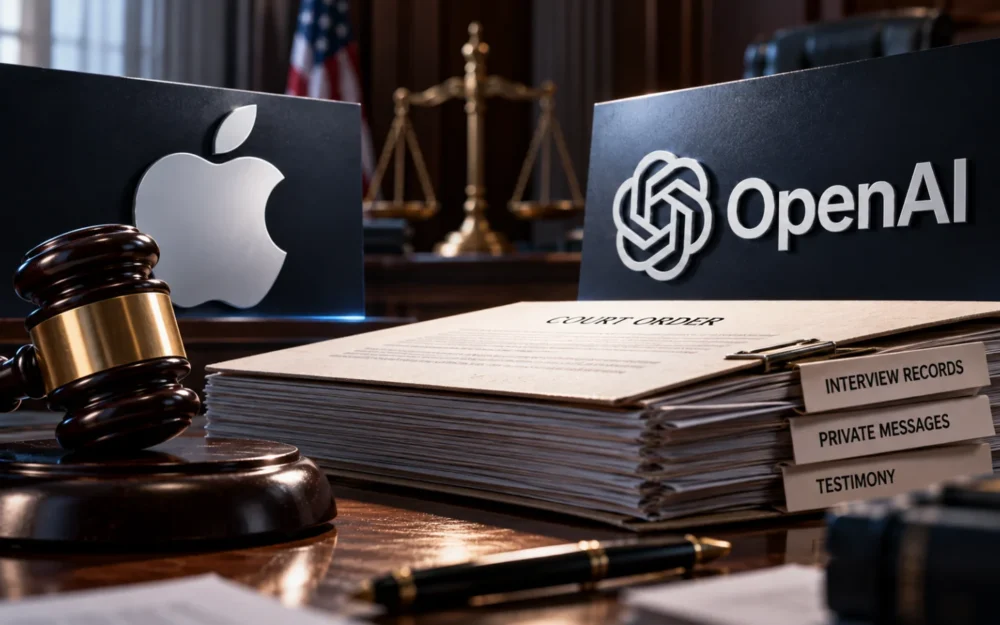
This incident is unrelated to OpenAI’s legal dispute with Apple, and nothing reported connects the two. We mention it only because readers following OpenAI’s legal news today will see both.
What happens next in the case?
No court dates have been reported, so the next concrete developments are unknown. The signals worth watching are a fuller statement from OpenAI, an official statement from police or prosecutors, any response from the employee or his representatives, and any detail on what the device captured.
If OpenAI describes how its models were used in the analysis, that would let readers judge the AI claim for themselves. Until then it stays an unverified part of an otherwise serious criminal allegation.
Frequently asked questions
What did OpenAI find in its office?
OpenAI says it discovered a sophisticated recording device hidden in one of its offices. The company has not been reported to describe what the device recorded, or whether anything was transmitted. One headline places it in a conference room, but that detail rests on the headline alone and has not been confirmed.
What is the OpenAI employee charged with?
A local report says the 35-year-old employee, named as Abdulrahman Alfozan, is charged with using or attempting to use a device to intercept oral communications. That is a wiretapping-type charge. It is an allegation, no conviction has been reported, and BriefFlash has not seen a court document.
How did OpenAI say it identified the employee?
OpenAI says it used its own AI models to understand the device and where it came from, and that this pointed to a specific employee who had planted it a few days earlier. The account comes from the company itself, and nothing has been independently verified or detailed.
Was anything actually recorded?
Reporting so far does not say. The charge as described covers using or attempting to use a device, so it does not by itself show that any conversation was captured. Motive, recorded content, and whether anyone else is involved have not been reported, and no police or court statement has been published.