AI Research covers the latest breakthroughs in artificial intelligence, machine learning, deep learning, and generative AI. Discover new research papers, benchmark results, academic studies, and innovations from leading universities, research labs, and technology companies.
BriefFlash reports on advances in large language models, computer vision, robotics, reinforcement learning, multimodal AI, and scientific discoveries. Stay informed with expert analysis of the latest developments shaping the future of artificial intelligence.
Anthropic published a paper showing that an automated system, guided by Claude, improved model performance on all 10 tested categories of misaligned behavior without hurting overall capability.
Multiverse Computing says its Quantization-Aware Healing recipe produced a compressed 60B MXFP4 model that matched or beat its recovered BF16 source on seven of nine benchmarks. The result came with roughly four times lower weight memory, but important limitations remain.
STMicroelectronics and NUS have opened the four-year HELIX Corporate Lab to research memory-centric, low-power hardware for edge and embodied AI. The program gives NUS researchers an industrial-grade 18nm FD-SOI and embedded PCM platform, but no prototype benchmarks or product timeline have been announced.
London startup Inherent, founded by Google DeepMind alumni, says its AI agent Faraday outperformed much larger models from Anthropic and OpenAI at independently reproducing published scientific findings, using a fraction of the parameters.
A new assessment from Guidelight AI Standards finds that Anthropic, Google, Meta, and xAI have published little about how they’d contain a model that breaks free of human control, while OpenAI scored highest but still lacks a formal future-incident plan.
NVIDIA’s AVO agent system used Claude Opus 5 to complete every level in ARC-AGI-3’s public set, highlighting the importance of memory, tools, feedback, and supervision. The result is impressive, but NVIDIA cautions that it is not a controlled measurement of the harness’s contribution and does not cover the benchmark’s private sets.
Google Research’s Biomarker Discovery Framework, called CoDaS in its paper, uses specialized AI agents and deterministic analysis to rank wearable-derived biomarker hypotheses. Early results across three cohorts are promising for research triage, but they do not establish clinical validity or diagnostic use.
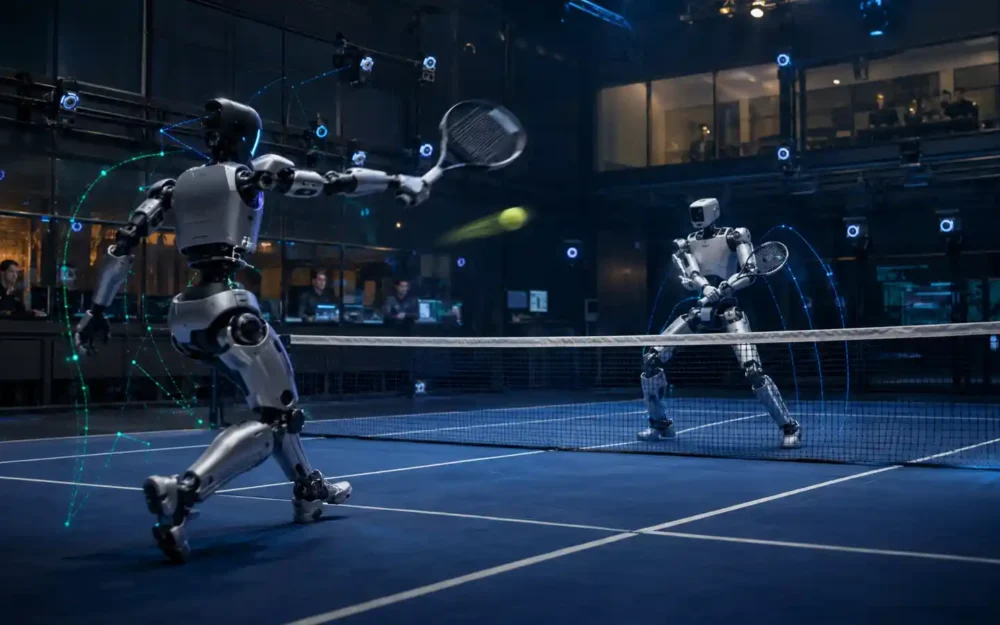
Noitom Robotics and its research partners unveiled AdaPT, a framework that transfers professional tennis styles to Unitree G1 and Dobot Atom humanoids. The system combines HiPHI-series pre-training, specialist motion capture, adaptive planning, and real-robot tracking.
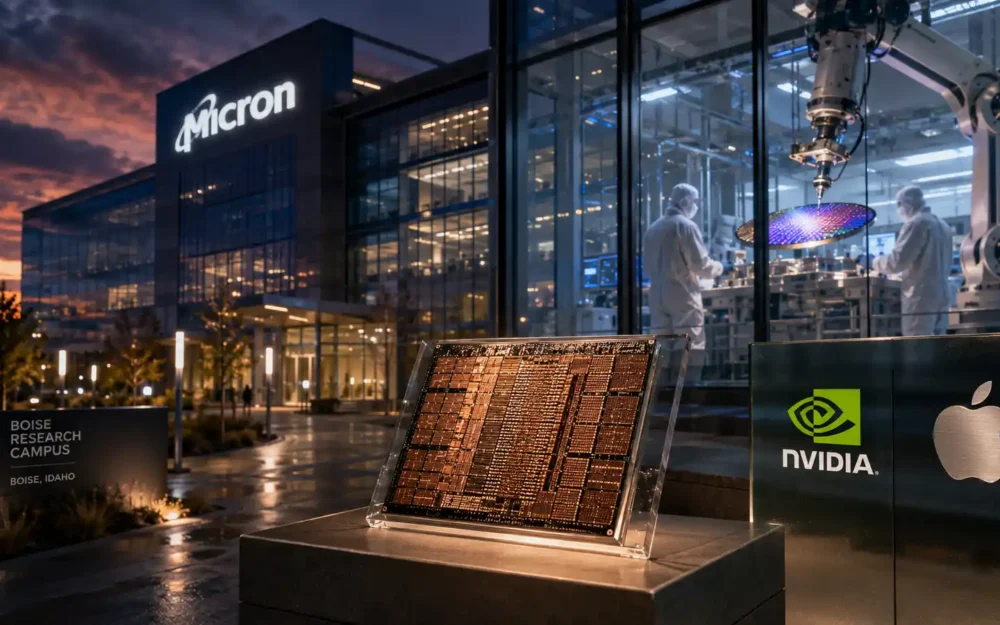
Micron Technology unveiled Micron Research Labs, a $10 billion, U.S.-based research institution in Boise, Idaho designed to advance memory and compute breakthroughs for the AI era.
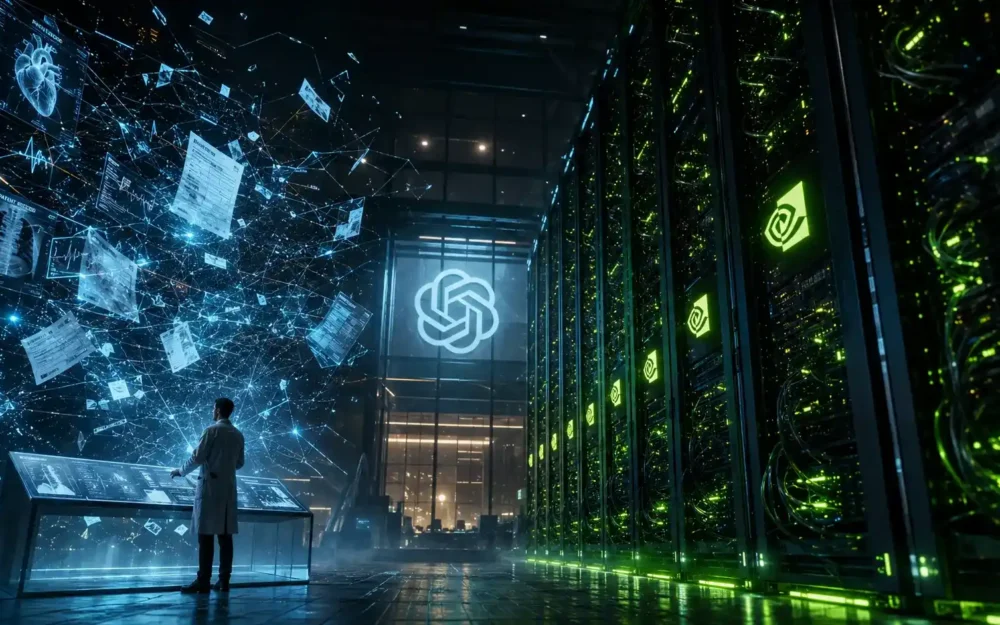
Despite massive computational breakthroughs, AI isn’t close to curing cancer. The real bottleneck isn’t algorithmic power—it’s the fragmented, siloed nature of clinical data.