AI Research covers the latest breakthroughs in artificial intelligence, machine learning, deep learning, and generative AI. Discover new research papers, benchmark results, academic studies, and innovations from leading universities, research labs, and technology companies.
BriefFlash reports on advances in large language models, computer vision, robotics, reinforcement learning, multimodal AI, and scientific discoveries. Stay informed with expert analysis of the latest developments shaping the future of artificial intelligence.
A new arXiv preprint on AI agent benchmark gaming shows how automated tuning of an agent’s surrounding harness can lift its score without the agent getting better at the task.
A new preprint argues that repeated rows in benchmark tables quietly inflate anomaly detection scores, and audits all 690 OddBench datasets to check how often it happens.
The Agent-Editing World Model preprint says predicting tool outputs adds little when real feedback exists, and names task-state contamination as a separate problem.
Two AI safety conversations went viral this week. One rests on a secondhand claim with no public evidence, the other on a 2015 study with much narrower limits than the retellings suggest.
Dario Amodei wants embedded evaluators inside every frontier AI lab, and Sam Altman said OpenAI will match the pledge. The evaluators who’d do the work say the plan is short on the details that would prove it’s real.
Google Research says its new Retrieve-for-Train framework trains AI search’s query decomposition once, offline, instead of reasoning through it live, cutting fan-out latency from nearly 50 seconds to under a few, per its own benchmarks.
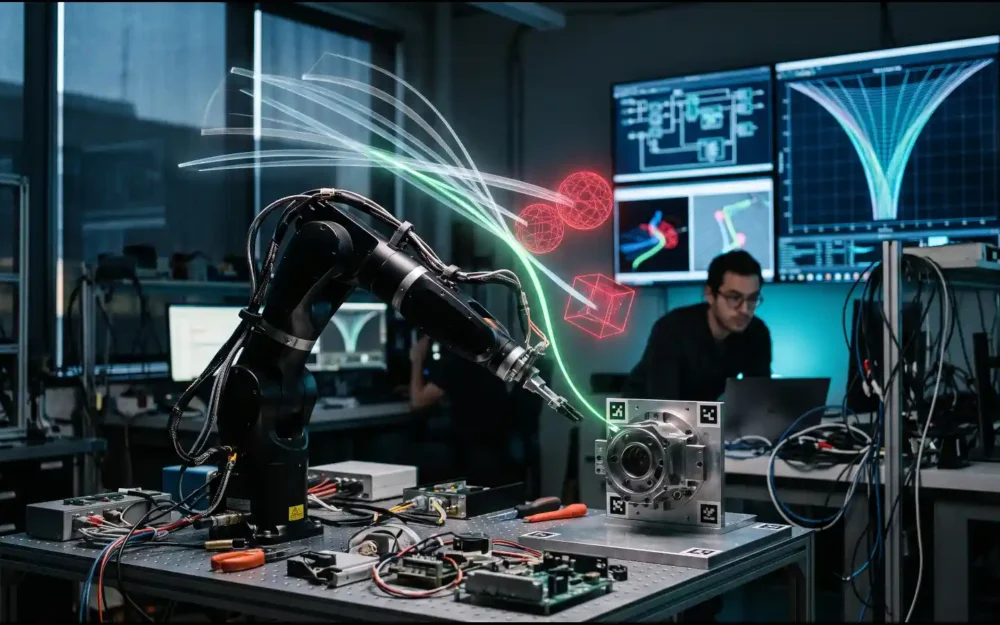
MIT researchers built an algorithm called HardFlow that lets pretrained generative AI models satisfy strict safety and physical constraints without retraining, hitting perfect constraint satisfaction across four simulated benchmark tasks against six rival methods.